
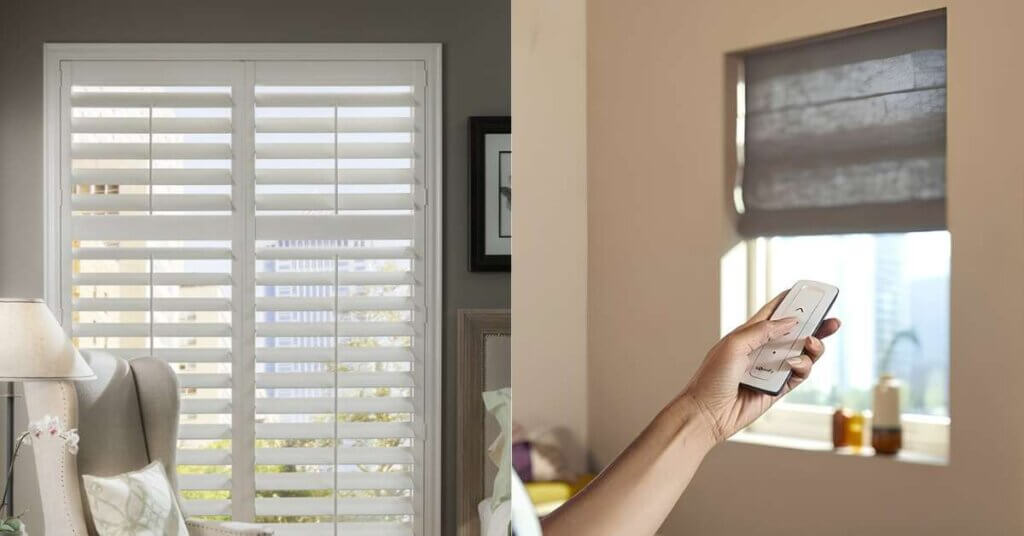
Choosing between manual vs. motorized window treatments depends on your windows, budget, and routine. Manual blinds, shutters, and shades are dependable, cost-friendly, and easy to maintain. Motorized treatments cost more upfront, but they add convenience, safer operation, and better access for tall or hard-to-reach windows.
Manual vs. Motorized Window Treatments: The Basics
Manual window treatments are adjusted by hand using cords, wands, tilt bars, louvers, or slats. They are common for blinds, plantation shutters, wood shutters, and many custom coverings.
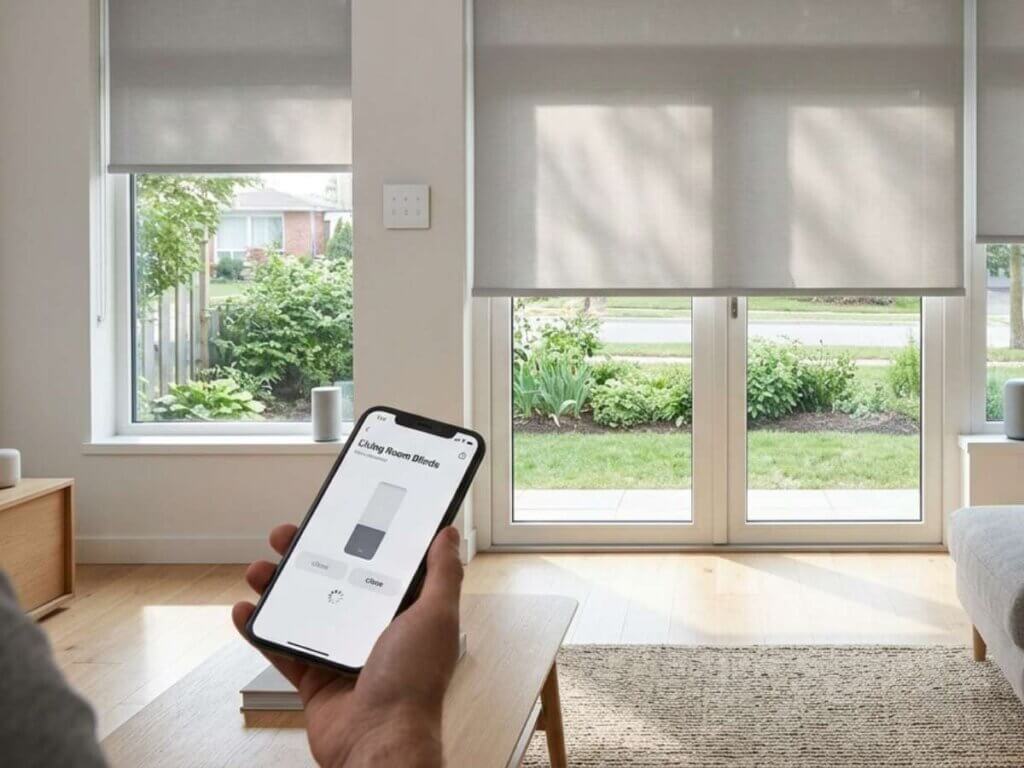
Motorized treatments use a motor to raise, lower, tilt, or adjust the covering. They can operate by remote, wall switch, app, timer, or smart-home system. Both options can improve privacy, insulation, light control, and interior comfort.
When Manual Window Treatments Make Sense
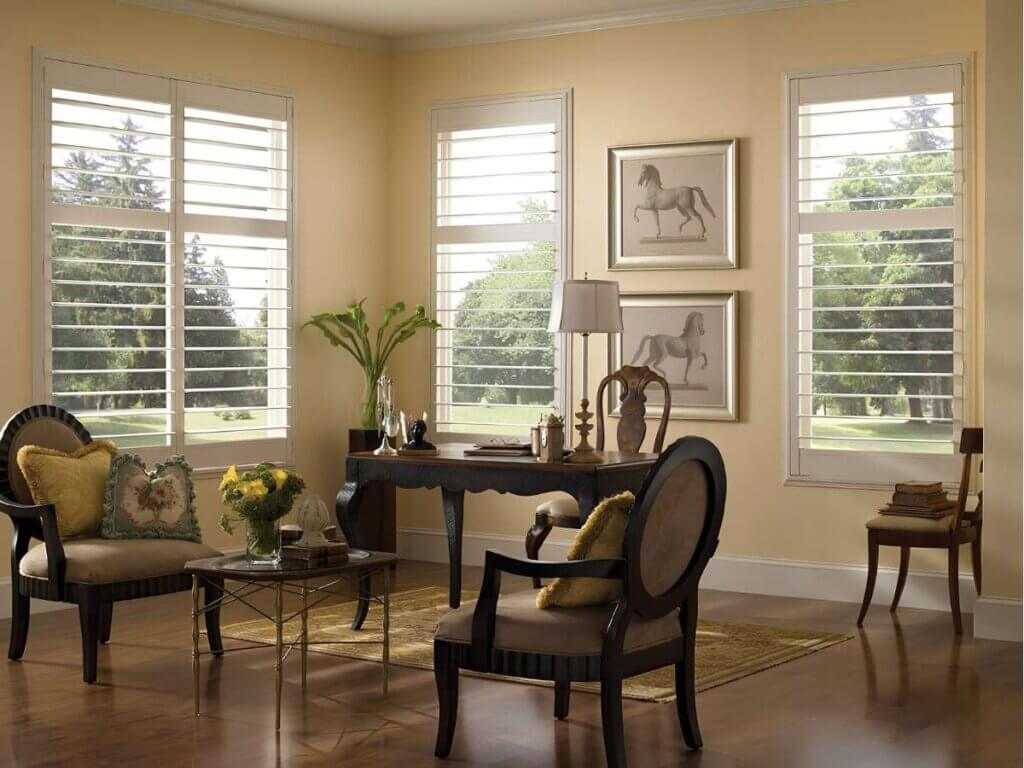
Manual treatments are practical when windows are easy to reach, and you want a lower cost. They have fewer moving parts, which can lead to simpler maintenance and greater longevity.
Best Uses for Manual Options
Manual window coverings work well for:
- Guest rooms, offices, and dining rooms
- Standard-height windows
- Plantation shutters with adjustable louvers
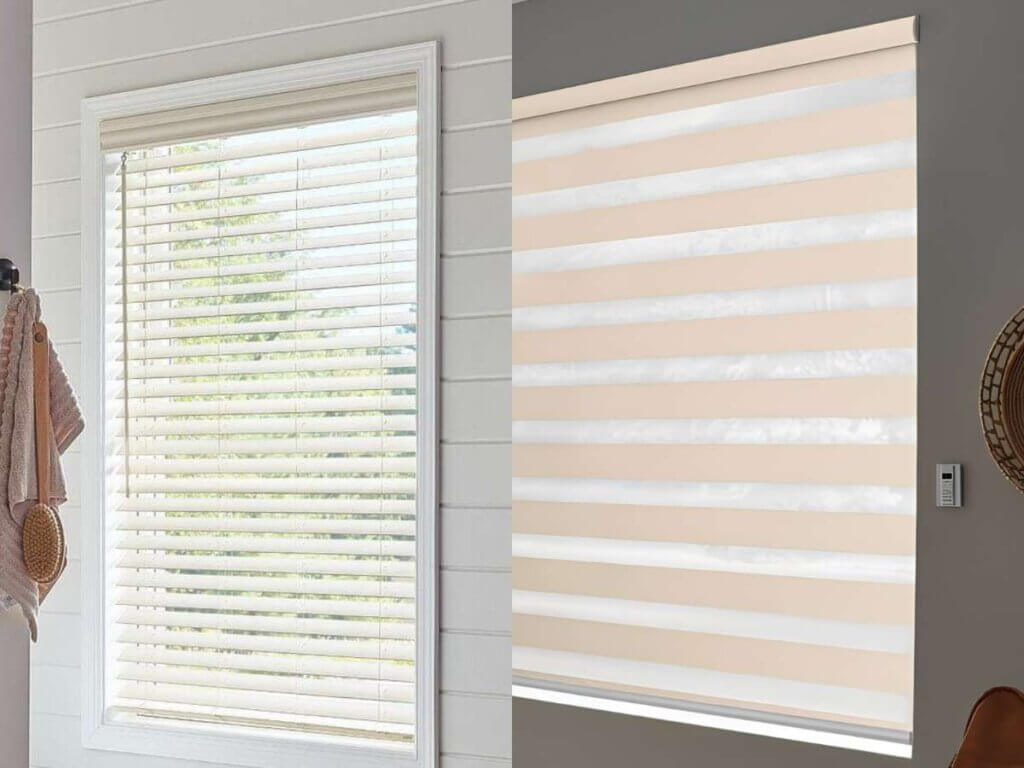
- Wood or faux wood blinds with tilting slats
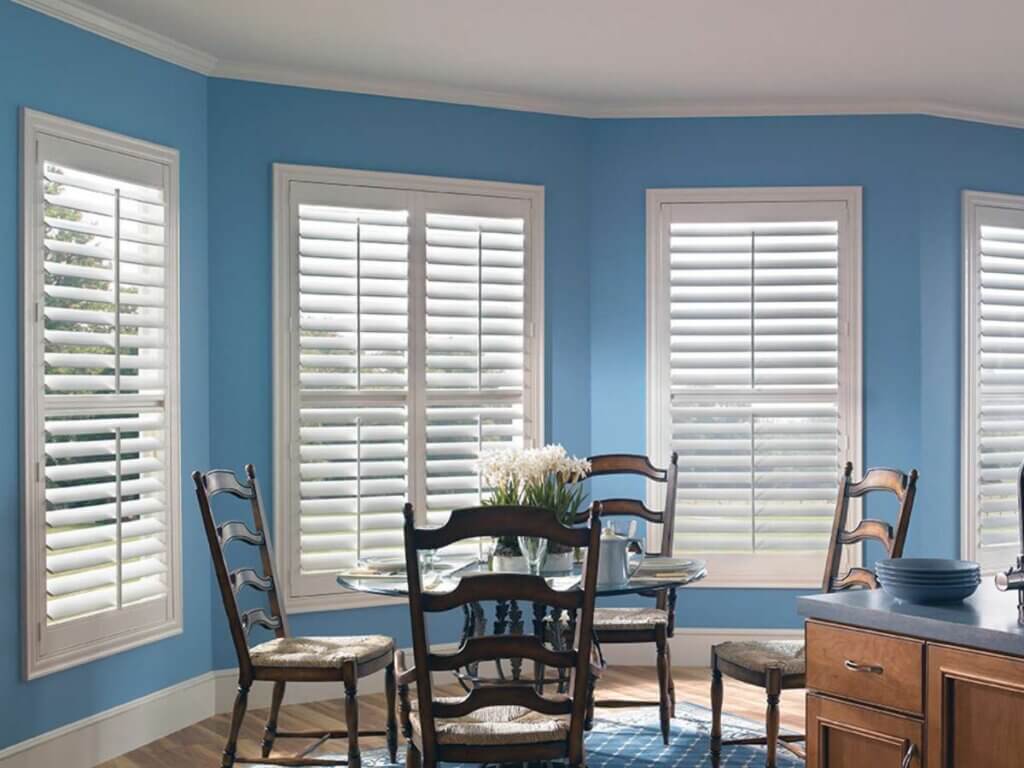
Manual shutters and blinds also offer strong design value. Hardwood shutters, premium finishes, and clean framing can make a room feel polished. They are useful when you want classic style, durable materials, and dependable privacy control.
When Motorized Window Treatments Are Worth It
Motorized window treatments are worth the upgrade when convenience and access matter. Instead of adjusting each window by hand, you can control multiple treatments at once.
Best Uses for Motorized Options
Motorized treatments are ideal for:
- Tall or hard-to-reach windows
- Large window walls
- Bedrooms and media rooms
- Rooms with many windows
- Smart-home control
Motorization can also support comfort. You can schedule treatments to close during strong afternoon sun, reduce glare, protect decor, and manage heat.
Quick Comparison
Feature | Manual Treatments | Motorized Treatments |
Cost | Lower upfront cost | Higher upfront investment |
Operation | Hand-adjusted | Remote, app, switch, or schedule |
Maintenance | Simple upkeep | May need charging or service |
Design | Many styles and finishes | Cleaner look with fewer controls |
Best For | Easy-to-reach windows | Tall or frequently used windows |
Design, Durability, and Value
Window treatments do more than cover glass. They affect aesthetics, decor, privacy, framing, and comfort. Custom shutters, wood blinds, and premium shades help each window look finished.
Manual plantation shutters are often chosen for durability and long-term value. A solid mount, quality materials, and adjustable louvers make them a strong fit for living rooms, dining rooms, and front windows. Motorized options bring a modern and luxurious feel. While the cost is higher, the value comes from easier control, cordless operation, and everyday convenience.
Which Option Should You Choose?
You do not always have to choose one option for the whole home. Many homeowners get the best results by combining manual and motorized window treatments.
For example, you might choose manual shutters for street-facing windows, wood blinds for guest rooms, and motorized shades for tall living room windows or bedrooms. This approach helps balance cost, style, materials, maintenance, and everyday convenience.
Frequently Asked Questions (FAQs) about Manual vs. Motorized Window Treatments
1. Can motorized window treatments be added to existing blinds or shutters?
Sometimes, motorization usually works best when built into the product from the start. Retrofit options depend on the brand, size, age, and operating system. Plantation shutters are typically manual.
2. What happens if the power goes out?
Battery-powered treatments may still work if charged. Hardwired systems usually stop unless connected to backup power. This is why many homeowners motorize only select windows.
3. Are motorized window treatments noisy?
Most modern systems are fairly quiet. You may hear a soft motor sound, but it should not be disruptive. Product quality and installation can affect the noise level.
4. Are manual shutters more durable than motorized shades?
Manual shutters are very durable because they have fewer mechanical parts. Motorized shades can also last well, but motors and power components may need service over time.
5. How often do motorized window treatment batteries need charging?
It depends on the product, window size, and how often you use it. Some batteries may last for months on one charge. Your installer can explain the expected battery life for your specific treatment.
Final Thoughts on Choosing the Right Upgrade
Manual and motorized window treatments both have clear benefits. Manual options offer lower cost, simple maintenance, classic design, and reliable longevity. Motorized options add convenience, safer operation, and a modern feel.
The right choice depends on your windows, budget, privacy needs, and daily routine. A thoughtful mix can give your home comfort, style, and long-term value without overspending. MITS Eastern Shore can help you compare your options and choose custom window treatments that fit your home, routine, and long-term goals. Schedule a consultation to find the right solution for your windows.