
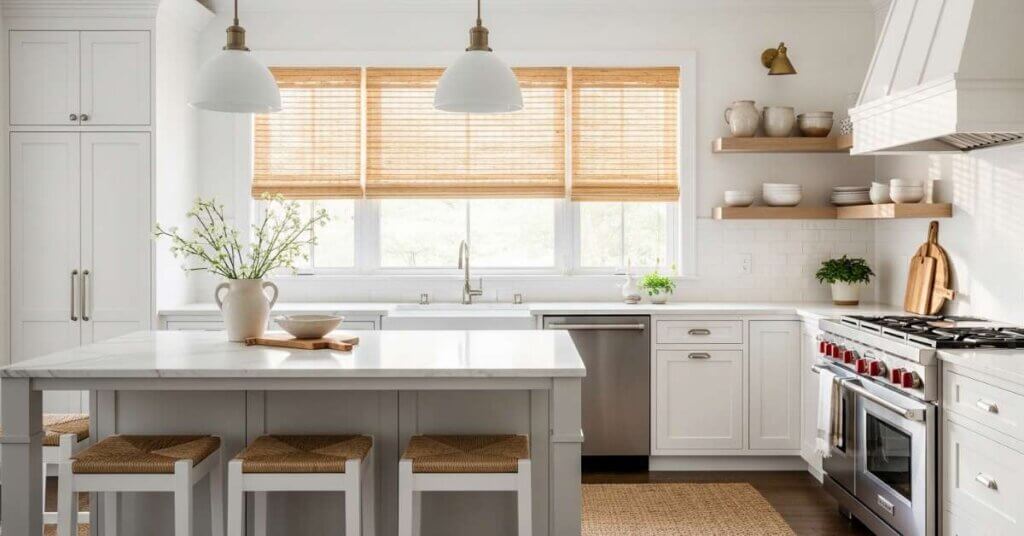
Why White Kitchens Need Warmth
White kitchens are timeless, but they can lack dimension if everything feels too uniform. Smooth cabinets, glossy surfaces, and neutral tones often need contrast to feel complete.
Common Design Gaps
- Spaces feel flat or overly sterile
- Natural light becomes too harsh
- Lack of texture makes the room feel unfinished
Woven shades address all of these by introducing organic fibers, earthy tones, and layered textures that balance the space naturally.
What Makes Woven Wood Shades Work
Natural Texture That Softens the Space
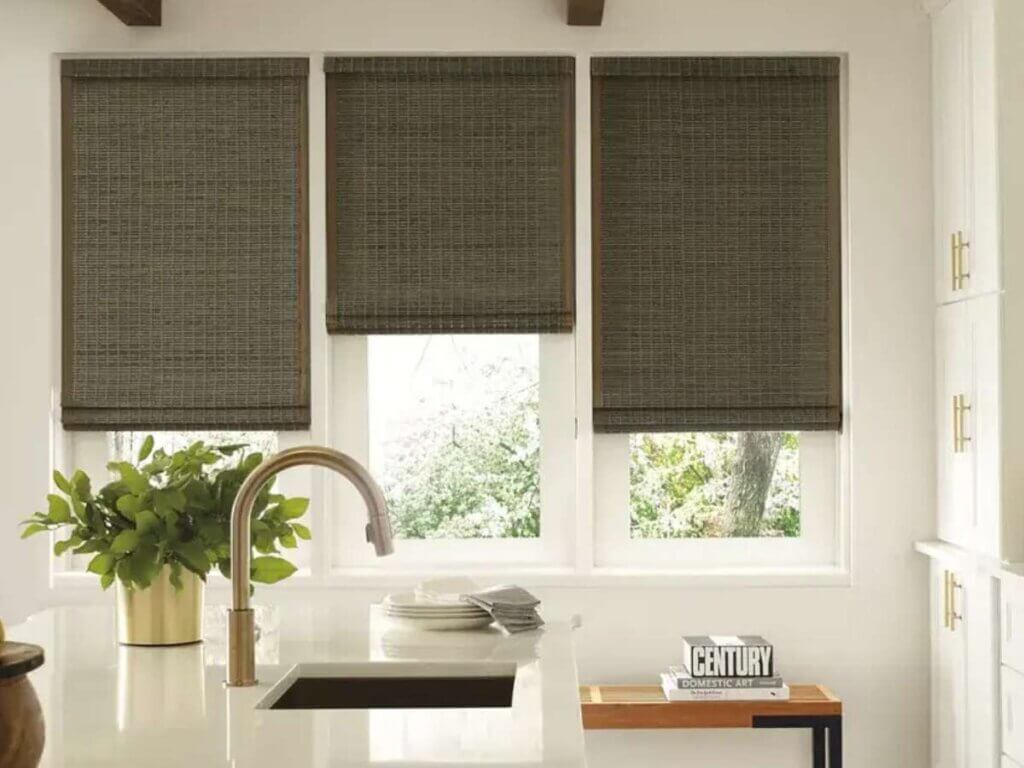
Woven wood shades are crafted from bamboo, jute, grasscloth, and rattan, bringing a tactile quality that painted surfaces simply can’t replicate.
- Adds depth to flat white surfaces
- Breaks up monotony with visible fibers
- Creates a relaxed, cozy atmosphere
Light Filtering Without Losing Brightness
Instead of blocking light completely, these window coverings gently filter sunlight.
- Maintains brightness while reducing glare
- Creates soft, diffused lighting
- Enhances a warm, inviting interior
Best Styles for White Kitchens
Roman-Style Woven Shades
Roman-style woven shades fold neatly when raised, adding a tailored look.
- Ideal for modern farmhouse or transitional kitchens
- Combines structure with soft textile layers
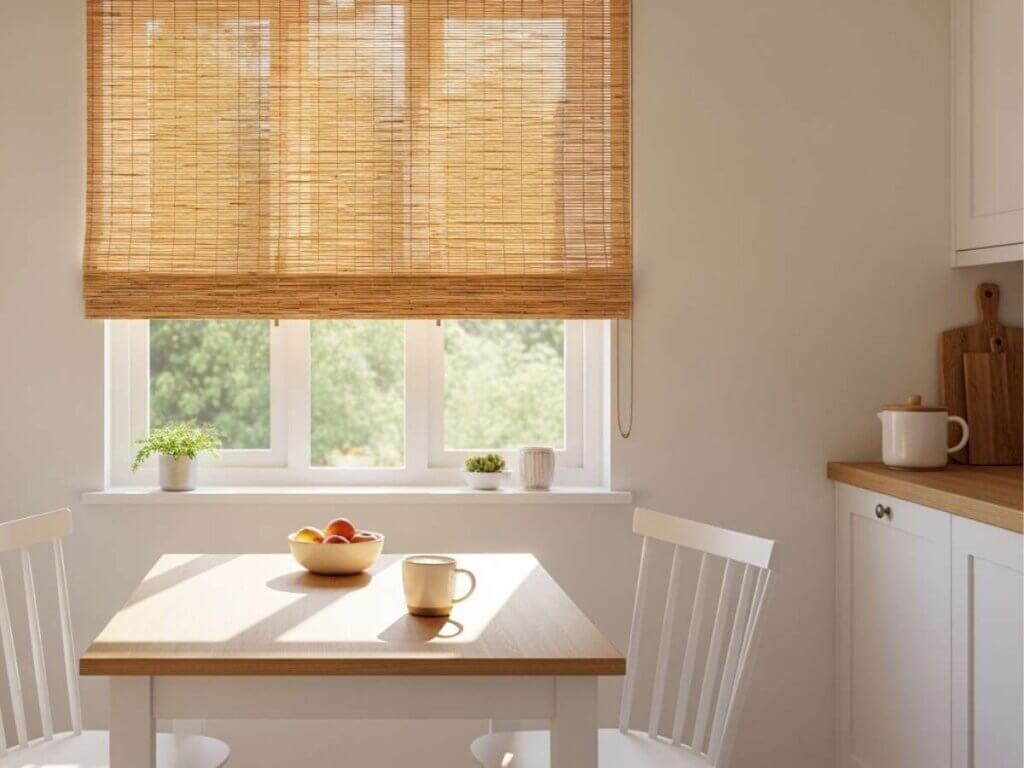
- Works well over sinks or breakfast nooks
Flat or Relaxed Shades
For a more casual feel, flat or relaxed woven shades are perfect.
- Great for coastal or boho styling
- Highlights the natural weave and texture
- Adds effortless charm to everyday spaces
Choosing the Right Material
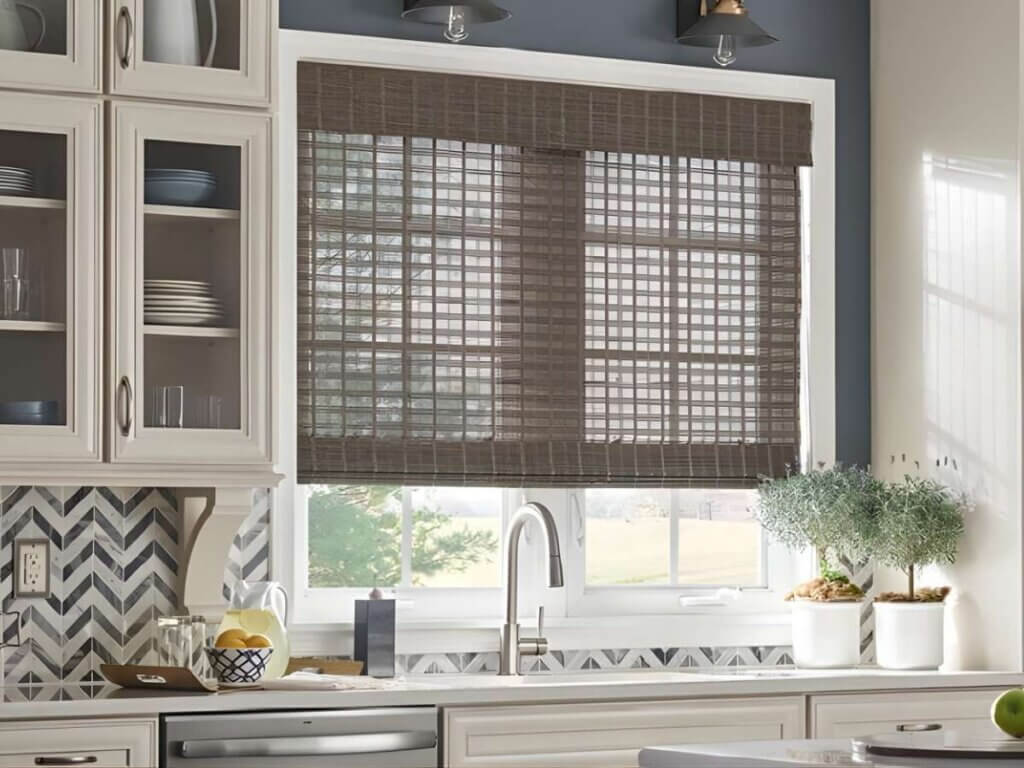
Not all woven wood shades look the same. The material you choose plays a big role in the final look.
Material | Look & Feel | Best For |
Bamboo | Clean, structured, subtle grain | Modern or minimalist kitchens |
Jute | Soft, earthy, slightly textured | Rustic or farmhouse styles |
Rattan | Bold weave, more visual depth | Coastal or boho interiors |
Grasscloth | Fine texture, elegant finish | Neutral, refined spaces |
How to Style Woven Shades in a White Kitchen
Layer for Added Dimension
Pair woven shades with soft drapery panels or valances.
- Adds visual depth through layers
- Enhances insulation and privacy
- Introduces more neutral tones for balance
Match Tones with Existing Elements
Tie your shades into other kitchen features.
- Coordinate with wood stools or shelving
- Complement flooring or ceiling beams
- Keep tones within a warm, earthy palette
Keep It Functional
Kitchens need practicality along with style.
- Choose liners for added privacy or light control
- Opt for cordless or motorized options for ease
- Select durable materials that handle humidity
Where Woven Shades Work Best
- Over sinks where natural light is strongest
- Breakfast areas for a relaxed, welcoming feel
- Large windows to soften bright daylight
- Open-concept kitchens that need warmth and cohesion
Frequently Asked Questions about Woven Wood Shades
1. Are woven wood shades good for kitchens?
2. Do woven shades provide enough privacy?
3. Can woven wood shades handle humidity?
4. What style works best for a modern white kitchen?
5. Are woven shades hard to maintain?
Conclusion
Woven wood shades offer a simple yet impactful way to transform a white kitchen into a space that feels warm, balanced, and inviting. By introducing natural textures, earthy tones, and soft, light-filtering elements, they bring life to even the most minimal interiors. With the right material and styling, these shades can tie together your kitchen’s design while improving everyday comfort.
If your kitchen feels a little too crisp or unfinished, adding woven shades might be the missing piece.
Schedule a consultation with MITS Eastern Shore today to explore woven-wood shade options tailored to your space, style, and daily routine.