
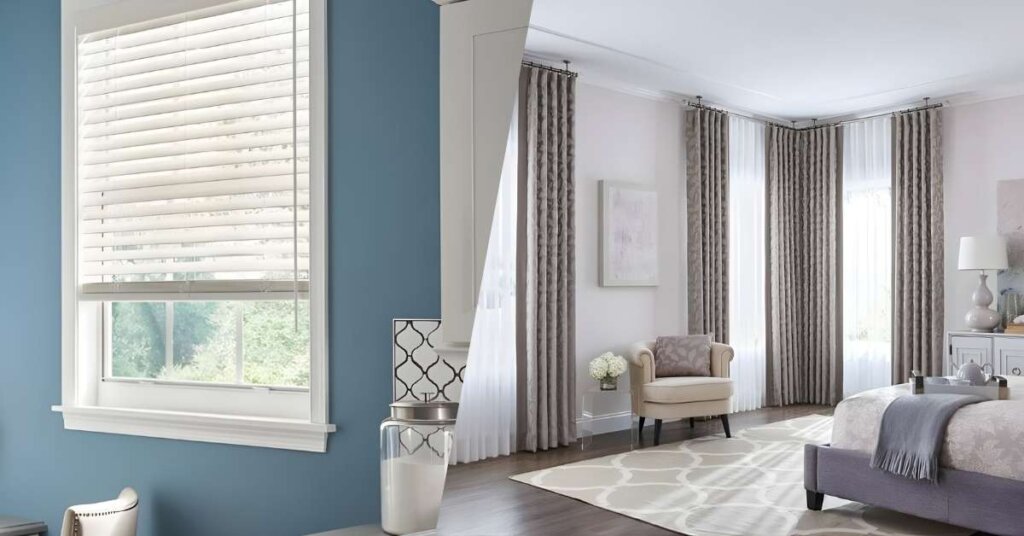
Choosing between blinds vs drapery comes down to control, comfort, and style. Blinds offer structured light management, durability, and easy maintenance. Drapery brings softness, texture, and dramatic visual impact. Both window treatment options improve privacy, insulation, and overall decor—but they perform differently depending on your needs, budget, and lifestyle. This guide breaks down materials, installation, light control, insulation, maintenance, and design to help you make a confident decision for your home on the Eastern Shore.
Understanding the Core Differences
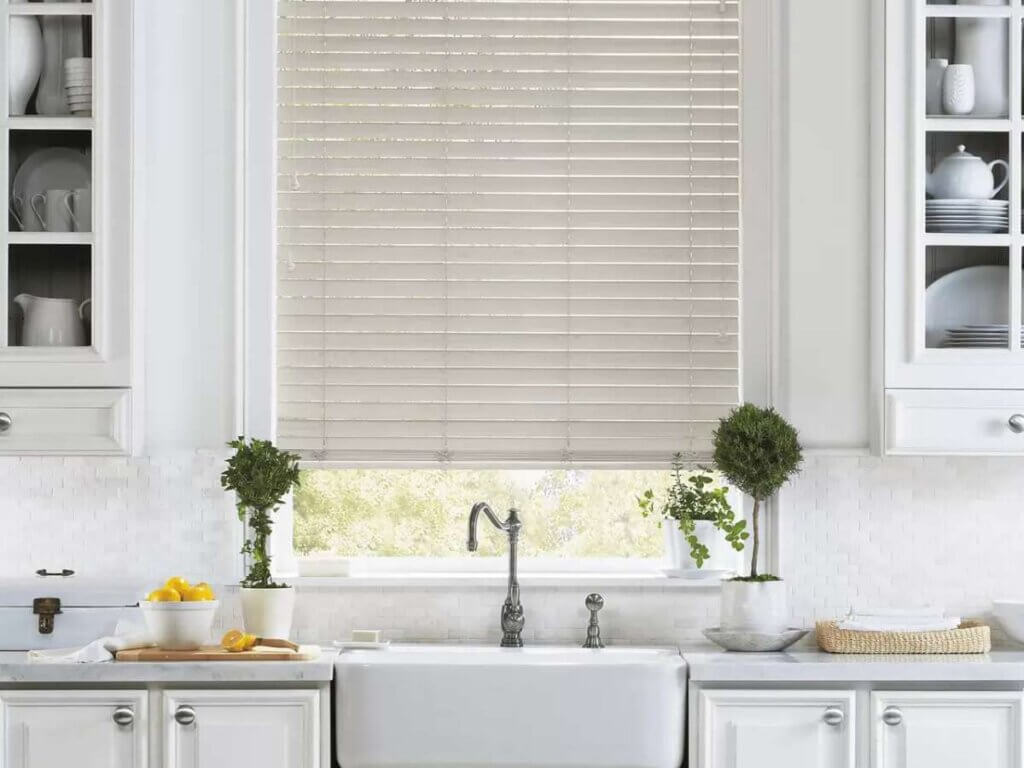
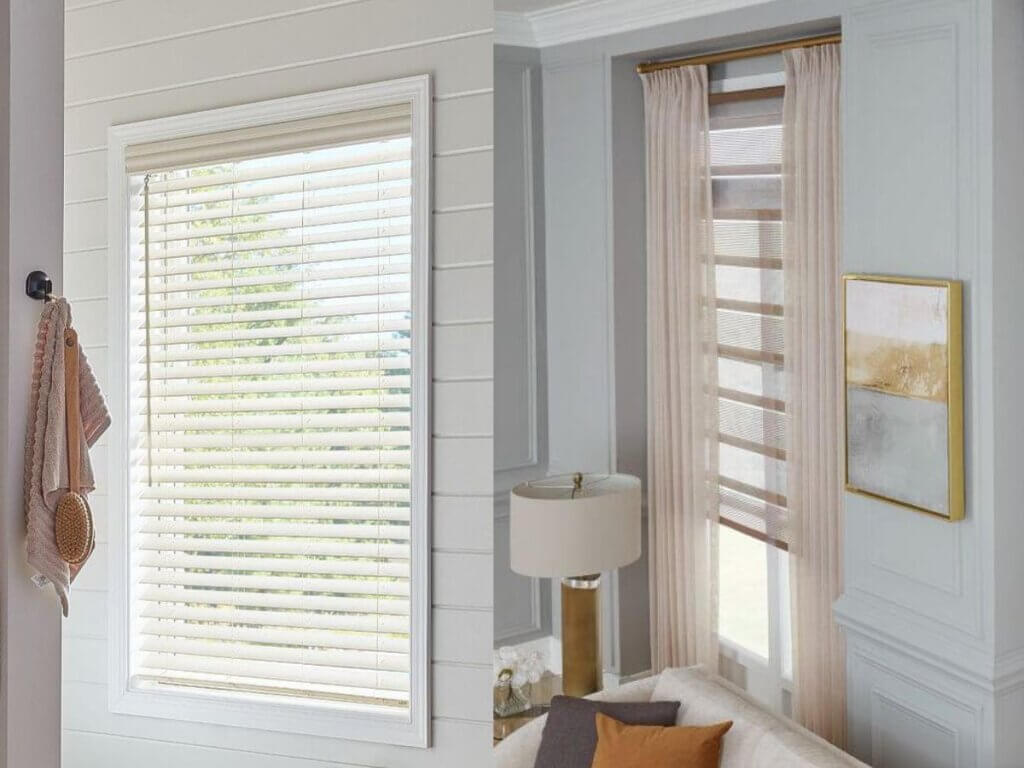
What Are Blinds?
Key Features:
- Structured, clean-lined aesthetic
- Excellent light direction and ventilation
- Available in cordless and motorization options
- Durable materials suitable for high-humidity areas
- Budget-friendly across many styles
Blinds are ideal for homeowners who want consistent control over light without bulky fabric layers.
What Is Drapery?
Drapery is fabric-based window treatment installed on a rod or track system. Panels may feature a decorative header, pleats, or custom mounting hardware. Fabrics range from airy sheer linen to full blackout panels with insulated lining.
Key Features:
- Adds softness and texture to a room
- Wide fabric selection (linen, velvet, patterned textiles)
- Strong decorative impact
- Can include blackout lining for full light blocking
- Pairs well with valance toppers or layered looks
Drapery is perfect for those wanting warmth, drama, or a more traditional aesthetic.
Light Control & Privacy
Blinds: Precision and Flexibility
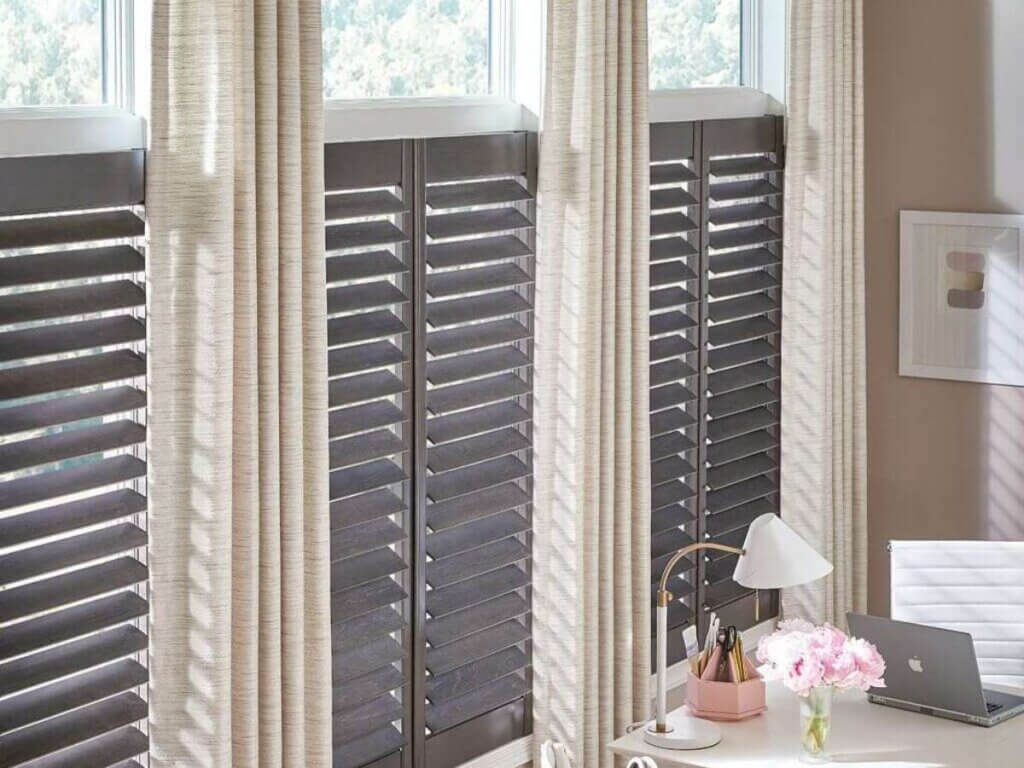
Blinds allow incremental adjustments. You can tilt slats to filter light while maintaining privacy—especially useful for street-facing windows.
Best for:
- Rooms needing frequent light adjustments
- Home offices managing glare
- Kitchens or bathrooms needing ventilation
Drapery: Soft Filtering or Total Blackout
Fabric panels offer two main benefits:
- Sheer panels for soft daylight diffusion
- Blackout drapery for complete privacy and sleep support
However, adjusting light typically means fully opening or closing panels unless layered with sheers.
Insulation & Energy Efficiency
Both options improve insulation, but differently.
- Blinds reduce solar heat gain by deflecting sunlight.
- Drapery with lining creates a fabric barrier that traps air, increasing insulation.
For drafty windows, layered drapery often performs better. For sun-facing rooms, reflective blinds may reduce interior heat buildup.
Aesthetic & Design Impact
Blinds: Clean and Modern
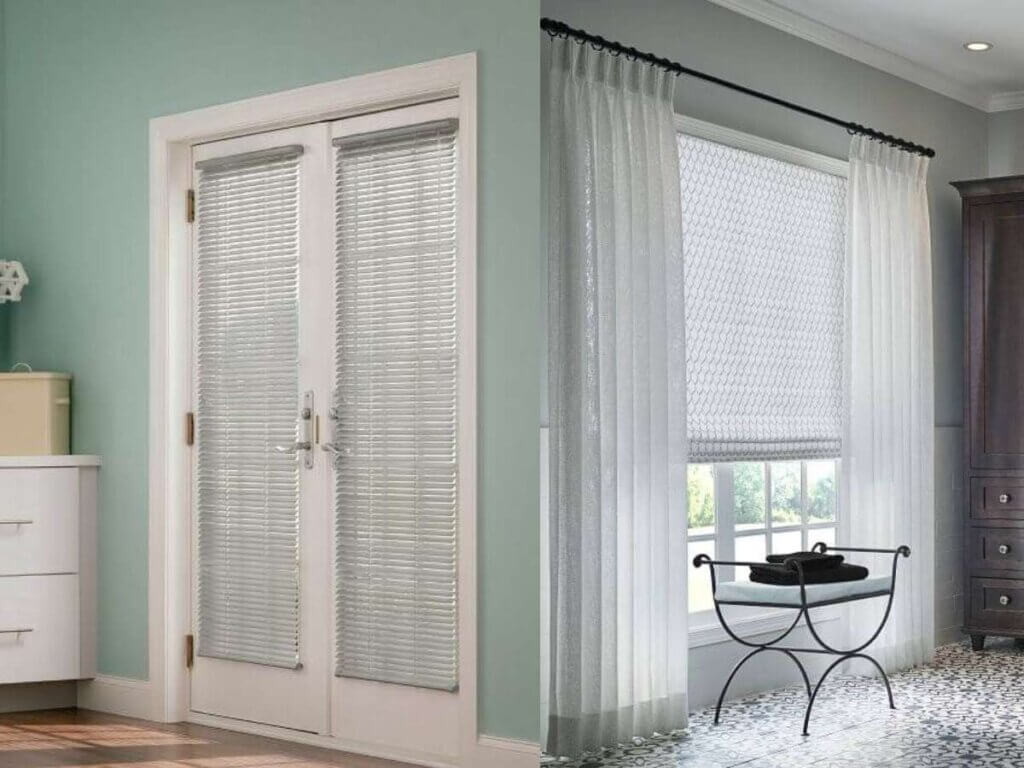
Blinds fit well in modern and transitional interiors. Wood blinds lean traditional, while aluminum styles feel contemporary.
Advantages:
- Minimal visual bulk
- Crisp silhouette
- Works well with simple decor
Drapery: Decorative Statement
Drapery enhances decor with texture and movement. It can elongate windows, soften sharp lines, and introduce color or pattern.
Advantages:
- Adds dimension and softness
- Customizable header styles
- Complements both modern and traditional spaces
Installation & Maintenance
Blinds
- Straightforward installation
- Easy cleaning (dusting or wiping slats)
- Highly durable in humid climates
- Long lifespan with proper mounting
Drapery
- Requires rod or track mounting
- Fabric may need occasional laundering or professional cleaning
- Less durable in high-moisture environments
If low maintenance is a priority, blinds often win.
Budget Considerations
Feature | Blinds | Drapery |
Initial Cost | Generally more budget-friendly | Fabric and lining increase cost |
Installation | Simple mounting | Rod + hardware required |
Maintenance | Low maintenance | Fabric care needed |
Longevity | High durability | Depends on fabric quality |
Customization | Moderate | Extensive fabric & header styles |
Blinds are typically more economical upfront. Custom drapery with premium fabric and blackout lining carries a higher investment.
Motorization & Cordless Options
Both treatments now support modern technology:
- Cordless blinds improve safety and clean aesthetics.
- Motorization allows remote or app-based control for both blinds and drapery.
For tall or hard-to-reach windows, motorized treatment significantly improves convenience.
When to Choose Each
Choose Blinds If You:
- Want structured light control
- Prefer durability and low maintenance
- Need ventilation flexibility
- Are working within a tighter budget
Choose Drapery If You:
- Want added softness and texture
- Prefer dramatic design impact
- Need enhanced insulation
- Value fabric customization
Many homeowners combine both—blinds for function, drapery for decor.
Blinds vs. Drapery Comparison Table
Feature | Blinds | Drapery |
Light Control | Precise control with adjustable slats; allows filtered light while maintaining privacy | Full open or closed unless layered; sheer or blackout fabric options available |
Privacy | Excellent daytime and nighttime privacy with tilt adjustments | Strong privacy when closed; sheer panels provide limited privacy |
Materials | Wood, faux wood, aluminum, composite | Linen, cotton, velvet, polyester, custom fabrics with optional lining |
Insulation | Reduces solar heat gain; moderate insulation | Superior insulation with thermal or blackout lining |
Ventilation | Slats allow airflow while maintaining coverage | Panels must be opened for airflow |
Aesthetic Impact | Clean, structured silhouette; fits modern or transitional decor | Adds softness, texture, and visual drama; suits traditional and layered designs |
Durability | Highly durable; moisture-resistant options available | Fabric lifespan depends on material and sun exposure |
Maintenance | Easy to dust or wipe clean | May require laundering or professional cleaning |
Installation | Mounted inside or outside window frame; straightforward hardware | Requires rod, track, or decorative header mounting |
Motorization & Cordless | Available with cordless lift or motorized systems | Motorized traverse systems available; cordless by design |
Budget Range | Typically more budget-friendly | Can be higher investment depending on fabric and customization |
Best For | Kitchens, bathrooms, offices, sun-facing windows | Living rooms, bedrooms, formal spaces, layered window decor |
Frequently Asked Questions About Blinds vs. Drapery
Which is better for blocking out light: blinds or drapery?
Both can reduce light effectively, but blackout drapery with proper lining typically provides more complete light blockage. Blinds offer excellent adjustable light control, allowing you to tilt slats for filtered light without fully darkening the room.
Are blinds or drapery better for energy efficiency?
Drapery with thermal lining generally provides stronger insulation by creating a fabric barrier that traps air near the window. Blinds help reduce solar heat gain by reflecting sunlight, which is beneficial for sun-facing rooms.
Which option requires less maintenance?
Blinds are usually easier to maintain. Most styles only require dusting or wiping down slats. Drapery panels may need occasional washing or professional cleaning, depending on the fabric.
Can I combine blinds and drapery on the same window?
Yes. Many homeowners layer blinds with drapery for both function and decor. Blinds handle light control and privacy, while drapery adds softness, texture, and decorative impact.
Are motorized options available for both blinds and drapery?
Absolutely. Both blinds and drapery can be upgraded with motorization systems for remote or app-based control. This is especially helpful for tall windows or hard-to-reach areas.
Conclusion
The blinds vs drapery decision ultimately depends on how you use your space. If precise light control, durability, and easy maintenance are your priorities, blinds are often the practical choice. If warmth, texture, and visual impact matter most, drapery delivers unmatched decorative value.
At MITS Eastern Shore, we help homeowners evaluate lifestyle needs, window conditions, and long-term goals before recommending a treatment. Every home is different, and the right solution balances light, privacy, insulation, and design.
If you’re weighing your options, schedule a complimentary consultation with our team. We’ll walk you through samples, explain mounting options, and help you choose a window treatment that fits both your space and your budget.