
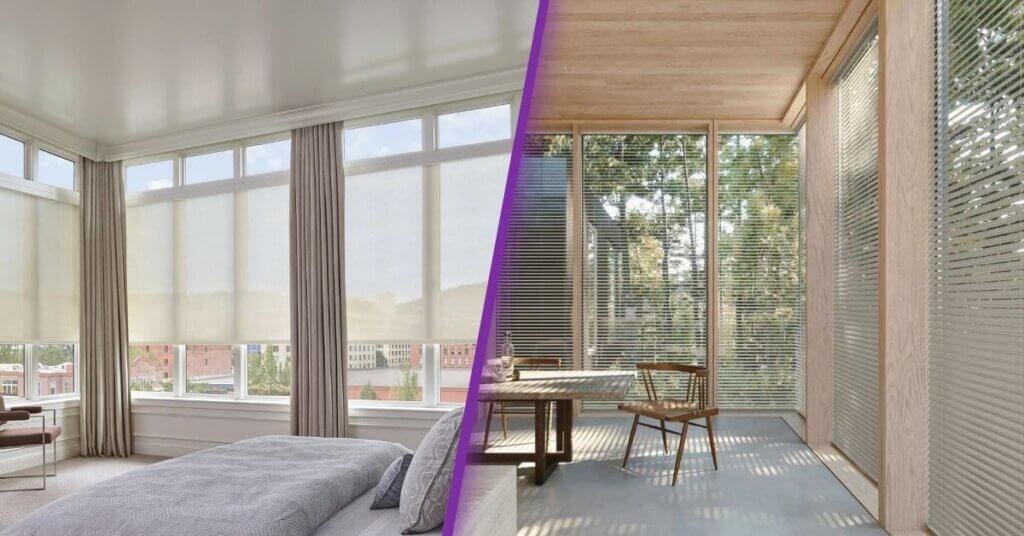
Choosing the right window treatments goes far beyond style—and comparing solar shades vs. blinds is often where homeowners begin. Both options enhance comfort, but they work in different ways: solar shades specialize in solar control, reducing glare, UV exposure, and heat, while blinds offer quick adjustability and reliable privacy. This deep dive helps you understand how each performs in real homes across the Maryland and Delaware beaches, including coastal communities such as Selbyville, Ocean View, and nearby Millville.
Solar Shades: Modern, Clean, and Built for Solar Control
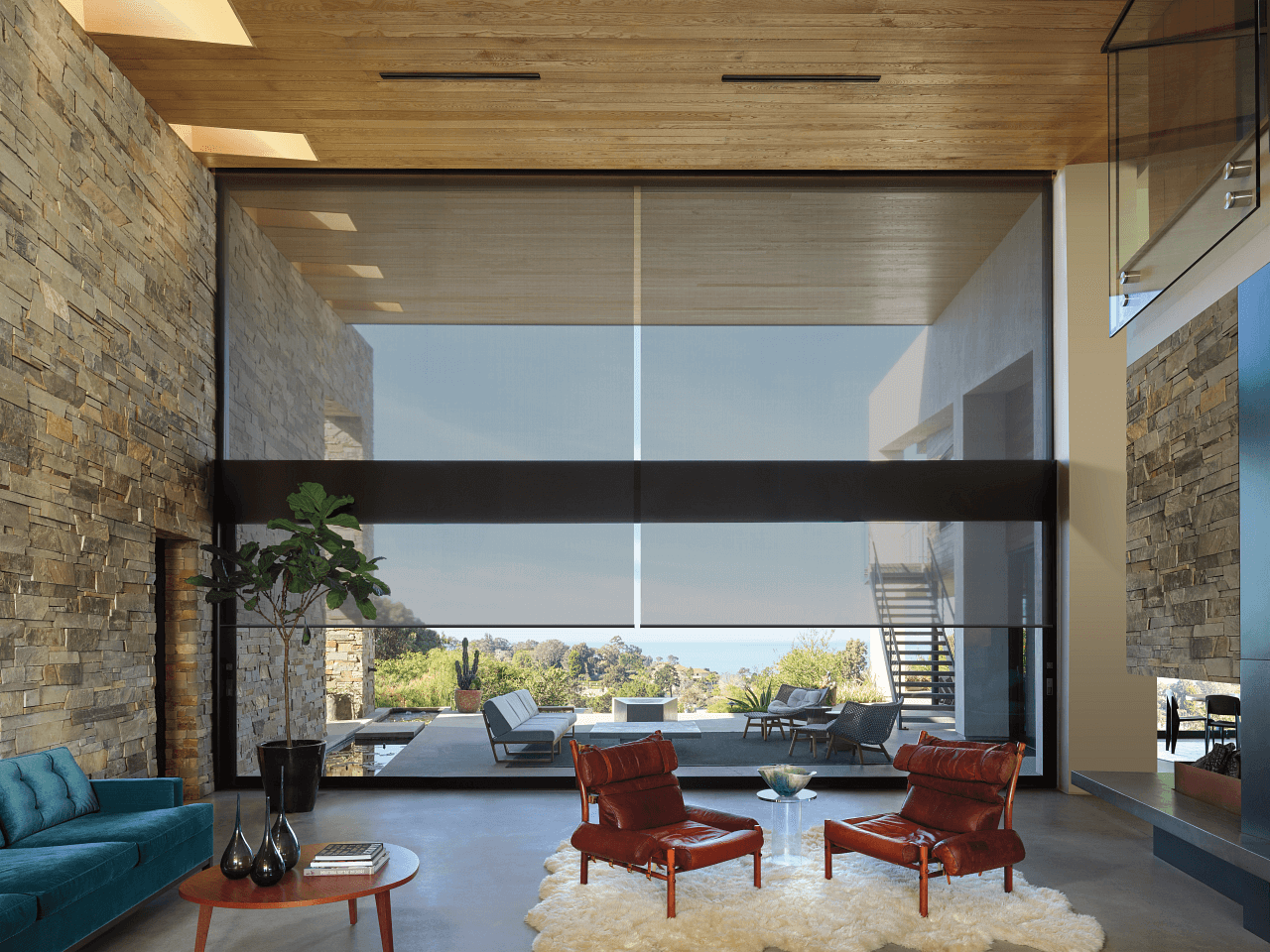
Solar shades deliver a streamlined look with practical, everyday benefits. Made to filter light, they help soften brightness in rooms with strong sun exposure—especially coastal homes near the bay, where reflective water and open views amplify sunlight.
Key Benefits of Solar Shades
- UV Protection & Glare Reduction: Ideal for rooms that face direct sunlight, helping protect furniture and flooring.
- Heat Control: Reduces solar heat gain, keeping spaces cooler and more comfortable.
- Light Filtering Options: Different openness levels help tailor brightness and visibility.
- Energy Efficiency: Supports temperature stability and reduces cooling demands.
- Motorized & Cordless Options: Safe, convenient choices for modern living.
- Easy Cleaning: Smooth surfaces allow for quick maintenance.
When Solar Shades Work Best
Solar shades excel in open-concept living rooms, sunrooms, and kitchen spaces where clear views and softened light matter. They’re especially effective for waterfront homes and bright spaces across the Delaware beaches, including homes near Millville, where strong sun exposure is common.
Blinds: Practical Control and Everyday Functionality
Blinds provide practical functionality with straightforward adjustability. Tilt, lift, or close them instantly based on privacy needs or changing light conditions.
Key Benefits of Blinds
- Flexible Privacy: Adjust as needed throughout the day.
- Room Darkening Options: Helpful for bedrooms, media rooms, or offices.
- Heat and Light Control: Direct or block sunlight with a simple movement.
- Cordless and Motorized Options: Ideal for households that prioritize safety and convenience.
- Durability: Designed for regular use with minimal maintenance.
When Blinds Work Best
Blinds remain a go-to for bedrooms, home offices, and high-traffic areas. They’re also popular in rental and vacation properties throughout Selbyville, Bishopville, and Millville, where easy adjustability is essential.
Solar Shades vs. Blinds
Below is an updated comparison table highlighting the key performance factors that matter most for coastal homes across Maryland and Delaware.
Table of Comparisons
Comparison Category | Solar Shades | Blinds |
UV & Heat Control | Excellent UV blocking and heat reduction; ideal for sunny waterfront homes | Moderate heat and light blocking when fully closed |
Glare Reduction | Superior glare control with consistent light filtering | Good, but light gaps may remain depending on angle |
Privacy | Strong daytime privacy; limited nighttime privacy | Strong privacy day and night when fully closed |
Adjustability | Set-and-forget light filtering; optional motorization | Highly adjustable for immediate light and privacy changes |
Energy Efficiency | Helps reduce heat gain; supports cooling efficiency | Offers mild insulation benefits when closed |
Performance Factors: Heat, Light, and Comfort
UV Protection and Heat Control
Solar shades provide strong protection from UV rays—essential for homes located in areas with intense sunlight. Blinds also offer solid heat control, especially when fully closed, although they don’t filter light with the same precision.
Solar shades outperform blinds when UV protection and consistent heat control are the priority.
Glare Reduction
Solar shades effectively soften glare, making them ideal for rooms with screens or tall windows. Blinds help reduce glare, too, but small light gaps may still appear.
Solar shades outperform blinds for glare control, especially in sun-filled rooms.
Insulation
Neither option is intended to be a comprehensive insulation solution, like cellular shades, but each contributes differently. Solar shades reduce heat gain during sunny hours, while blinds create a physical barrier when fully closed.
Blinds slightly outperform solar shades for insulation due to their ability to block more airflow when closed.
Durability, Upkeep, and Everyday Use
Solar shades resist fading and hold up well in homes with heavy sun exposure. Their smooth surfaces simplify cleaning.
Blinds are built for constant adjustments and remain durable with proper care. Routine dusting keeps them looking clean, even in coastal environments with higher levels of airborne particles.
- Solar shades outperform blinds in long-term fade resistance.
- Blinds outperform solar shades for daily, repetitive adjustability.
Cost Analysis: What to Expect
Solar shades typically fall into a mid-to-premium price range depending on openness level, automation features, and material quality. Their efficiency benefits provide long-term value.
Blinds span a wide cost range, offering budget-friendly to premium options. This flexibility makes them suitable for whole-home projects and investment properties.
Installation: Custom Options & Considerations
Both solar shades and blinds can be tailored to fit almost any window size, including specialty windows commonly found in beach homes.
Considerations:
- Solar shades need precise measurements to ensure smooth, even rolling.
- Blinds require secure mounting to remain stable under daily use.
- Motorization is available for both, but electrical access and layout matter.
Professional measurement and installation guarantee smooth operation and a clean, finished appearance.
FAQs About Solar Shades vs. Blinds
Are solar shades effective for nighttime privacy?
Solar shades provide excellent daytime privacy but become more transparent at night when interior lights are on. This is because the fabric is designed for solar control, not evening coverage. For bedrooms, homeowners often pair solar shades with drapery or choose blinds for stronger nighttime privacy.
Which one is better for energy efficiency overall?
Solar shades typically deliver better energy efficiency during the day because they block UV rays and reduce heat gain. Blinds help regulate comfort when closed but cannot filter sunlight as consistently. Your choice depends on whether you value daytime openness with heat control or complete closure for warmth retention.
How long do solar shades and blinds last in coastal areas?
Solar shades often last longer in high-sun environments because their materials resist fading. Blinds remain durable over time, especially models designed for moisture resistance and daily use. Proper cleaning and avoiding excessive force during adjustments help extend the life of either product.
Make an Informed Choice for Your Home
Both solar shades and blinds offer significant benefits, but their strengths differ in terms of comfort, privacy, aesthetics, and performance. By understanding how each option behaves in bright, coastal environments, you’ll be better equipped to choose the right fit for your lifestyle.
Ready to explore custom solar shades or blinds for your Delaware or Maryland beach home? Schedule an in-home consultation with MITS Eastern Shore for thoughtful guidance and tailored recommendations.