
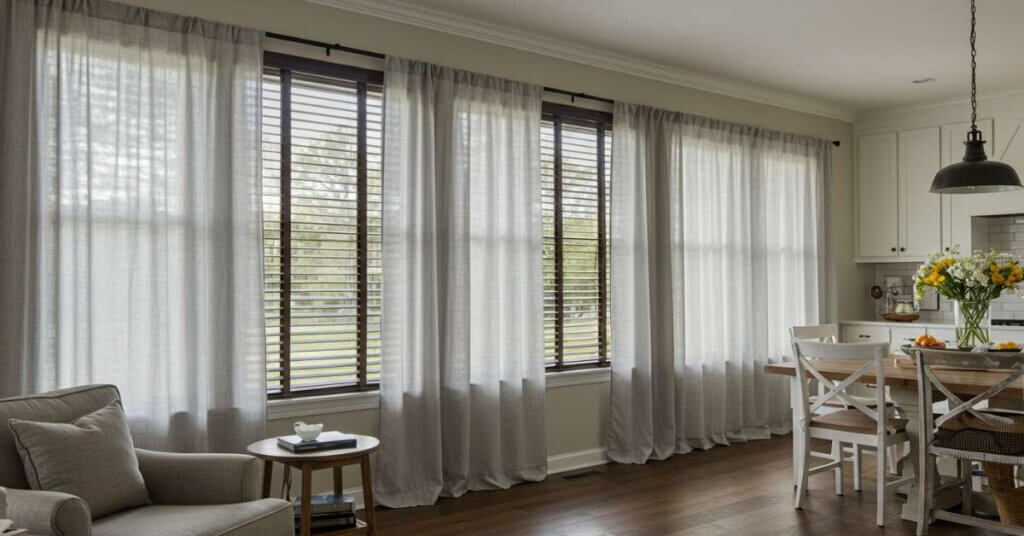
Layering window treatments means combining two or more coverings—like blinds with curtains or shades with drapes—to achieve both style and function. This approach enhances privacy, light control, and insulation while adding texture, color, and depth to your décor.
In this beginner’s guide, you’ll learn why layering works, see five expert design ideas, and get practical tips for mixing fabrics, colors, and hardware. Whether your goal is everyday functionality, a polished designer finish, or a blend of both, this guide will show you how to layer with confidence.
Why Layering Window Treatments Works
Layering is more than a design trend—it’s a practical solution. Using multiple window coverings allows you to balance function and style in one space. A shade or blind creates privacy and light control, while a second layer, like drapery, valances, or sheer shades, adds design flair and softness. This combination also helps regulate temperature, making it easier to maintain comfortable rooms year-round.
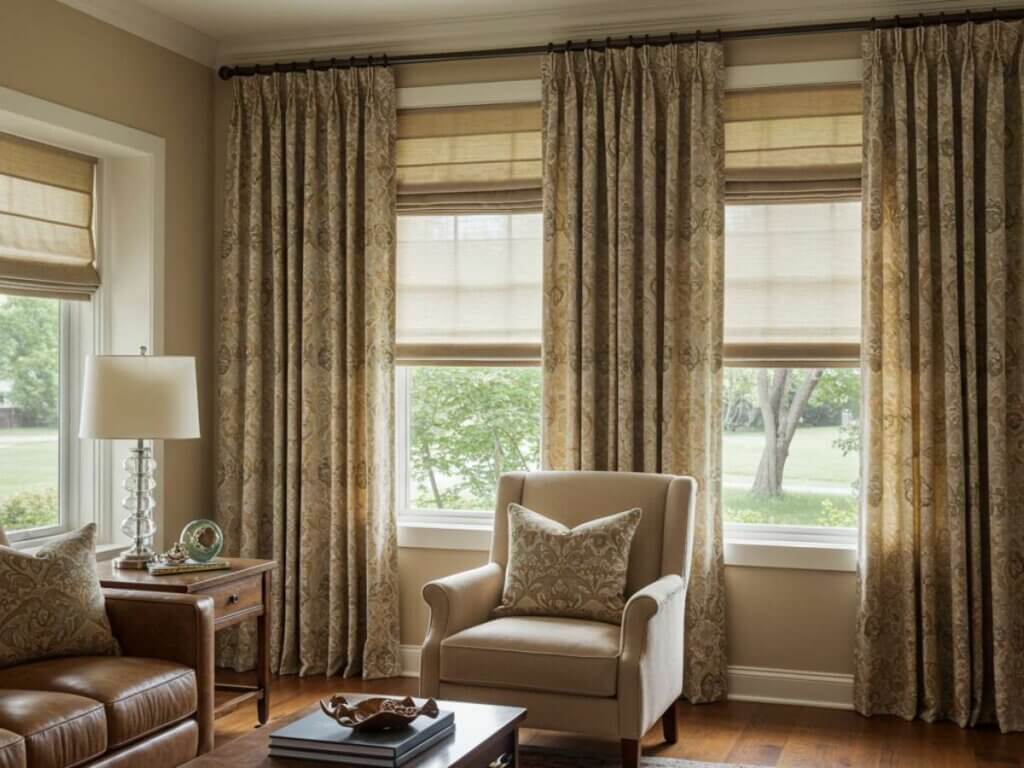
In interior design, windows often serve as focal points. Proper layering frames the window, adds height or width to a room, and introduces texture and color. The result is a polished, professional look that ties together other design elements in your space.
5 Window Treatment Layering Ideas
Here are five versatile combinations that bring both function and style to your windows:
1. Blinds with Curtains
Classic and practical, blinds deliver everyday light control and privacy, while curtains frame the window with color, softness, and added dimension.
2. Roman Shades with Drapes
Roman shades provide a sleek, tailored base, and drapery panels introduce texture and visual interest, making this a polished choice for living and dining rooms.
3. Sheer Shades with Drapery Panels
Sheer shades diffuse sunlight and reduce glare, while drapery panels ensure privacy and create a layered, designer finish.
4. Valances or Cornices with Shades
Adding a structured top treatment to roller or cellular shades conceals hardware and delivers a more formal, custom look.
5. Layered Drapes with Decorative Hardware
Combine two drapery fabrics—lightweight for softness, heavyweight for function—and complete the design with rods and finials that act as decorative accents.
These ideas highlight how layering window treatments blends functionality with interior design details, giving your home a professional yet personal touch.
Design Tips for Layered Window Styling
Coordinate Fabrics and Colors
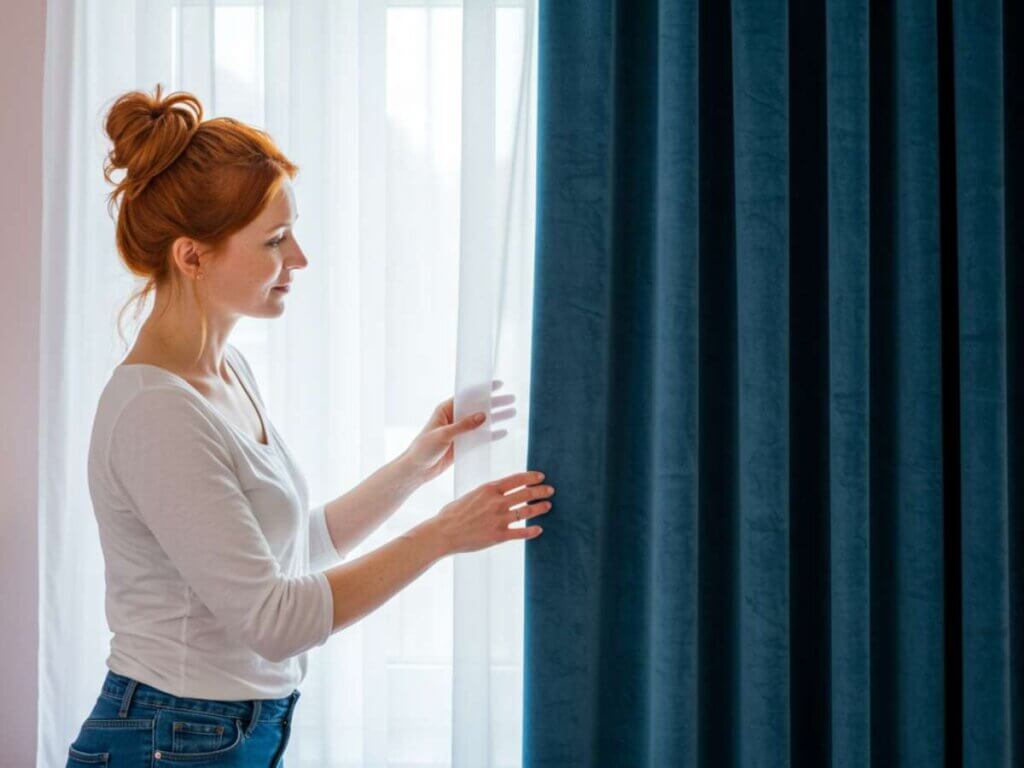
Select fabrics that complement each other. For instance, pair neutral roller shades with patterned drapery to achieve contrast without overwhelming the room. Stick to a consistent color palette to maintain harmony.
Play with Textures
Mix smooth fabrics, such as silk, with heavier materials like linen or velvet. Texture layering creates depth and elevates a simple drapery design into standout window decor.
Balance Proportions
Ensure the top layer does not overpower the base. For example, lightweight sheer shades paired with full-length drapes create an airy yet polished look.
Consider Function First
Always plan for how you’ll use the treatments. If privacy is key, start with blackout shades and then add aesthetic layers, such as decorative panels. If flexibility is a priority, opt for adjustable blinds and pair them with flowing draperies.
Common Mistakes to Avoid
Even beginners can achieve expert design if they avoid a few pitfalls:
- Overcrowding the window – Too many layers can feel heavy and reduce usability.
- Ignoring proportions – Oversized valances or short drapery panels disrupt balance.
- Mismatched styles – Pairing rustic wood blinds with ultra-modern metallic drapes can create a disjointed look.
Keep simplicity and purpose in mind, and every layer will contribute to the whole.
FAQs About Layering Window Treatments
1. Can I layer blinds and curtains together?
Yes, combining blinds with curtains is one of the most popular ways to layer your window treatments. Blinds provide precise light control, while curtains add softness, color, and texture. This pairing also makes it easy to adapt the look for casual or formal spaces.
2. Do layered treatments work in small rooms?
Absolutely. Layering can actually make smaller rooms feel larger if done correctly. Use lighter fabrics, streamlined shades, and drapery hung higher above the window to create the illusion of more height and space.
3. How do I choose the right hardware for layers?
Hardware should be both functional and decorative. Double rods are ideal for sheer shades and drapes, while cornices or valances conceal hardware for a clean finish. Select finishes that complement other fixtures in the room to maintain visual cohesion.
Schedule Your Personal Window Styling Consultation
Layering window treatments can seem intimidating at first, but with the right guidance, it becomes a simple way to create polished, custom windows. From functional shades to decorative drapery, each layer plays a role in shaping your room’s comfort and style.
Contact MITS Eastern Shore today to schedule a consultation. Our team serves homes across Selbyville, DE, and the Maryland and Delaware beaches, offering expert advice, custom solutions, and professional installation for every project.