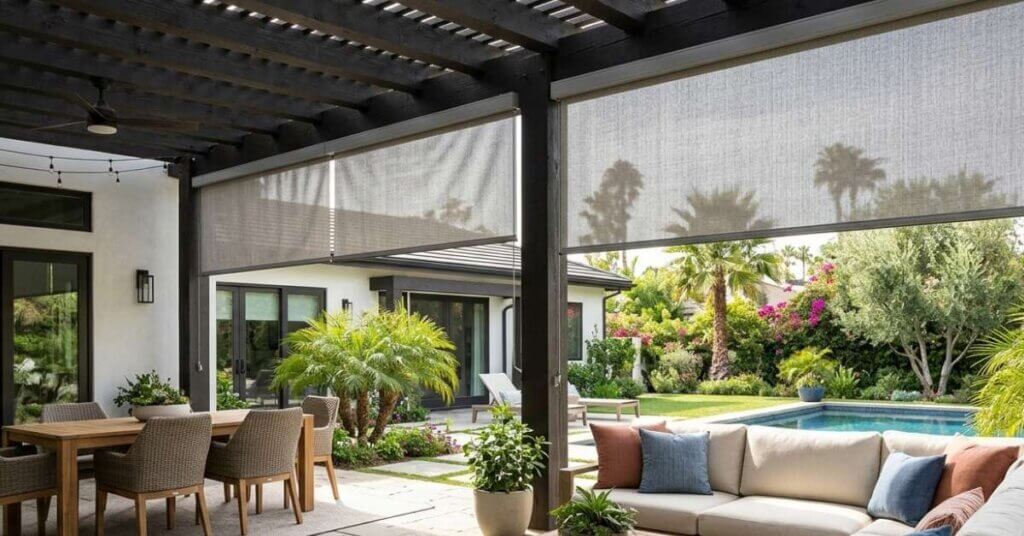
Patio shades are an excellent addition to any outdoor space, offering comfort, protection from the sun, and an aesthetic boost. However, various factors influence the total cost of patio shades. Understanding these factors can help you make a more informed decision.
Material Choices and Their Impact on Cost
The material of your patio shades is a primary factor in determining the overall price. Various materials are available, each with its pros and cons:
- Fabric: Offers a wide range of colors, textures, and finishes. The quality of fabric, including weave, opacity, and UV resistance, directly affects durability and price.
- Wood and Composite: These materials offer a natural look but cost more due to their durability and premium finishes.
- Vinyl and Aluminum: More affordable, these materials are low-maintenance and durable, offering UV protection and weather resistance.
Size and Dimensions
The size of your patio shades plays a major role in determining the cost. Larger shades or those covering more area will naturally be more expensive. Custom-sized shades are also typically pricier than standard ones.
- Standard Sizes: These shades are usually less expensive.
- Custom Sizes: Custom-made shades, tailored to your specific dimensions, cost more due to specialized labor and materials.
Installation Costs
Installation is a crucial part of the total cost, particularly if you’re hiring a professional. While DIY installation can save money, professional installation ensures your shades are mounted correctly and function well.
- Manual Shades: Straightforward to install with basic hardware, they typically have lower labor costs.
- Motorized or Retractable Systems: These require more technical installation and will add to the overall cost.
Motorization and Automation
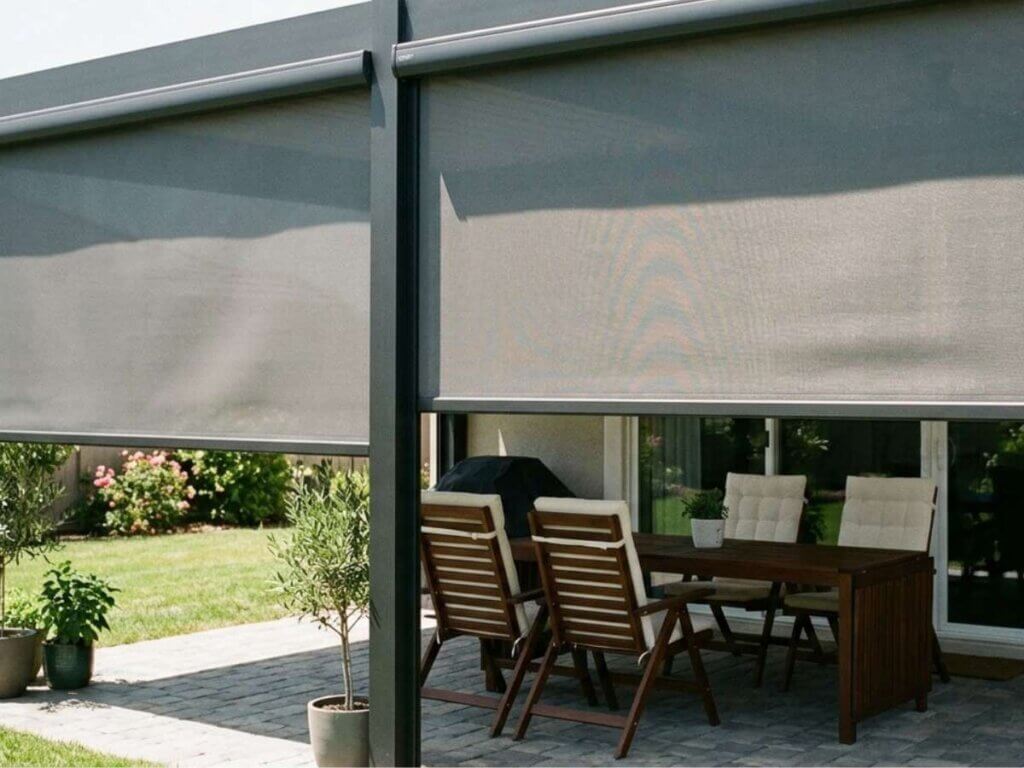
Motorized patio shades offer convenience, allowing you to adjust them remotely or through sensors. These automated systems come with higher upfront costs due to the technology involved.
- Motorized Systems: These shades can be controlled via remote or wall switch.
- Automated Shades: Built-in sensors detect changes in weather, sunlight intensity, wind, or temperature, and adjust the shades accordingly. Note that sensor-equipped systems vary by brand, so features aren’t universal.
Customization and Aesthetics
Customization significantly affects patio shades costs. Tailored shades let you choose fabric type, opacity, hardware, and colors, ensuring they align perfectly with your outdoor aesthetic.
- Fabric Options: Higher-end fabrics and custom designs will increase the cost.
- Brand: Choosing a top-tier brand may raise the cost, but it often ensures better quality and longer-lasting materials.
Durability and Maintenance Costs
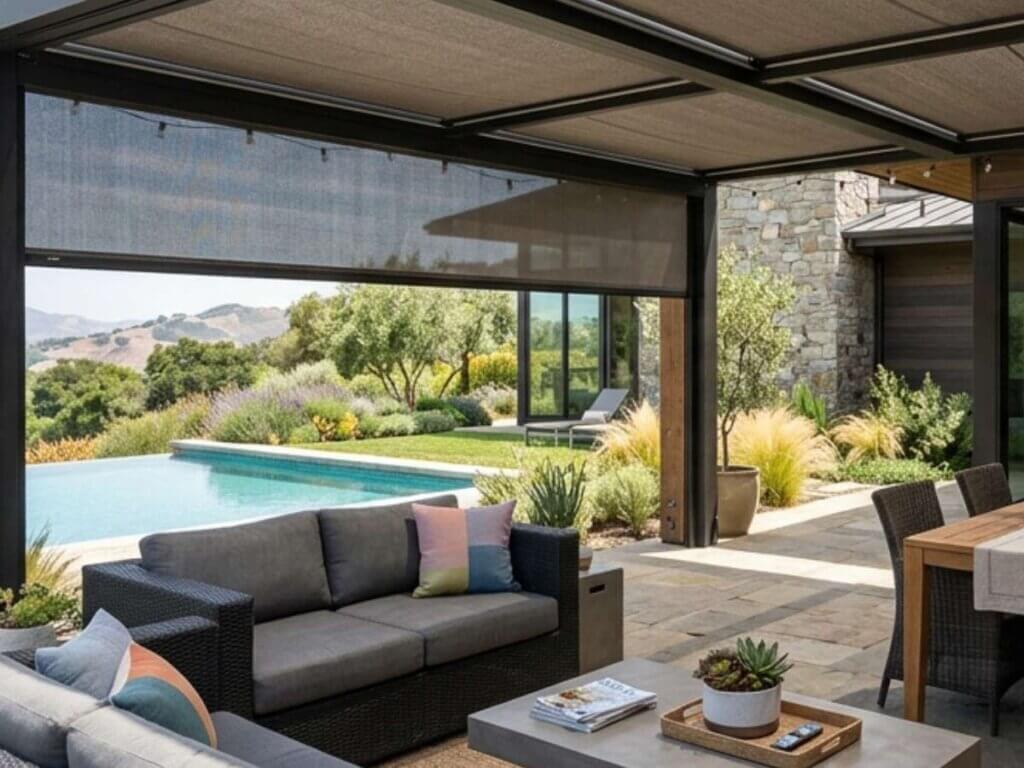
Durability is an important factor that impacts both initial costs and long-term maintenance. Higher-end materials will generally last longer and require less maintenance, but they often come at a higher cost.
- UV Protection and Insulation: Shades with high UV ratings reduce heat gain, protect furnishings from fading, and can enhance thermal insulation in covered outdoor spaces.
- Maintenance: Fabric shades may require more frequent cleaning than vinyl or composite options. Regular maintenance can add to long-term costs.
Shipping and Warranty
Shipping costs, especially for custom shades, can add to the total price. Also, consider the warranty period when purchasing patio shades. A longer warranty can offer peace of mind but may come with a higher price tag.
- Shipping: Custom or large shades may incur higher shipping costs.
- Warranty: When comparing options, check what each warranty covers, particularly for motorized components, fabric, and hardware, as comprehensive coverage can significantly offset long-term costs.
Frequently Asked Questions (FAQs)
1. What is the average cost of patio shades?
Patio shades typically range from $100 to $1,000 or more, depending on the material, size, and features. Custom motorized systems will be on the higher end.
2. Are motorized patio shades worth the investment?
Motorized patio shades provide convenience, especially for larger spaces or hard-to-reach windows. While more expensive, they offer great value for ease of use.
3. What should I consider when choosing patio shade materials?
Consider weather resistance, maintenance, and aesthetics. Fabric shades offer variety but require more cleaning, while vinyl or aluminum shades are durable and low-maintenance.
4. How long do patio shades last?
The lifespan depends on the material and maintenance. Composite or aluminum shades last longer, while fabric shades may need to be replaced sooner due to weather exposure.
5. Can I adjust the opacity of my patio shades?
Yes, many patio shades offer adjustable opacity for light control. Fabric options vary in opacity, while retractable shades provide flexible light adjustment.
Wrapping Up: Your Patio Shades Investment
Understanding the factors behind patio shade costs helps you make the best decision for your home and budget. From material choices to installation, motorized systems, and customization, many factors determine the final price. If you’re ready to enhance your outdoor space with high-quality patio shades, MITS Eastern Shore is here to help. We offer expert advice, customization options, and professional installation.
Get in touch with us today to schedule a free consultation and discover the best patio shades for your needs!