
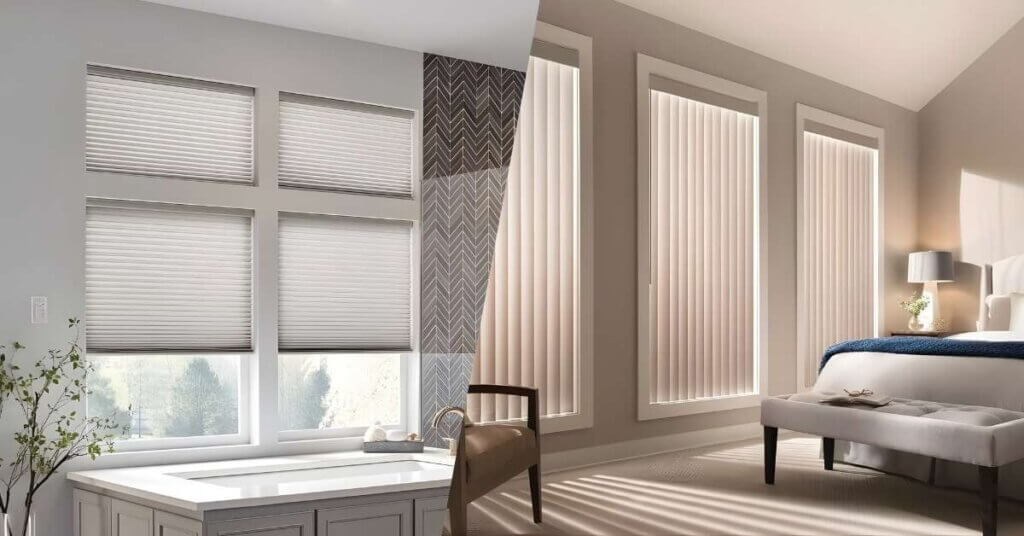
Understanding the Structure & Design
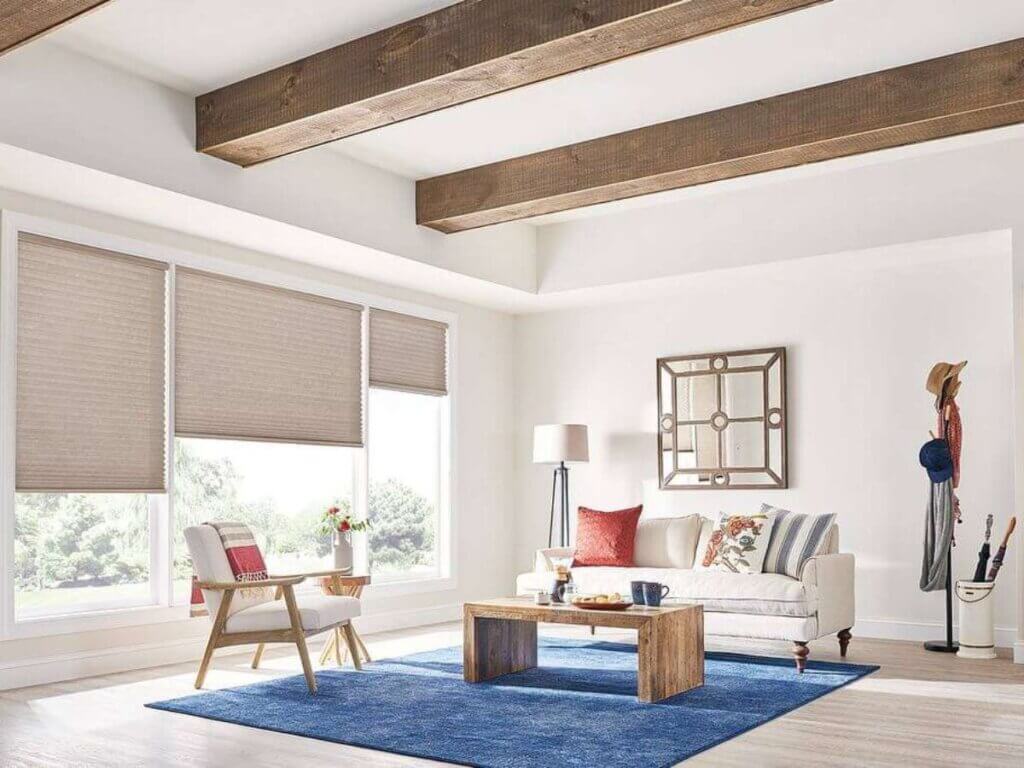
Cellular (Honeycomb) Shades
Cellular shades, often called honeycomb shades, feature a unique cell construction that traps air within structured pleats. This design enhances insulation, helping regulate indoor temperatures year-round.
They’re available in various pleat size options, light filtering or blackout fabrics, and flexible mounting options for different window types. Many homeowners choose them for bedrooms and living areas where energy efficiency and comfort matter most.
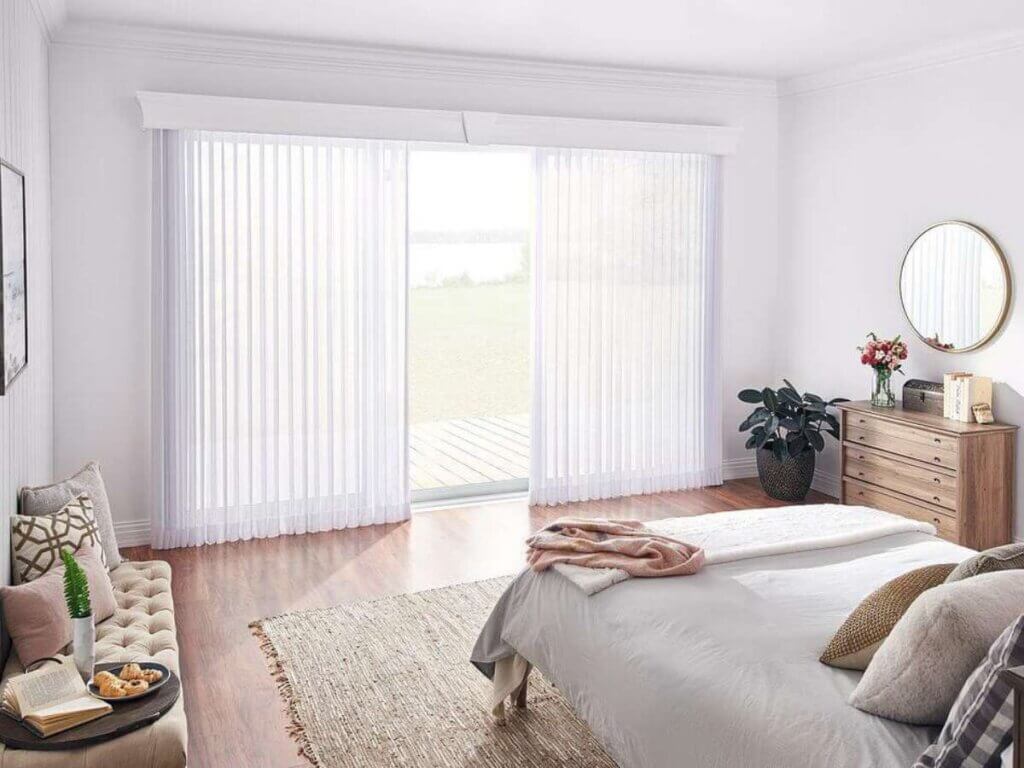
Vertical Blinds
Vertical blinds consist of individual slats that hang vertically from a headrail track. These slats rotate for adjustable light control and slide side to side for easy access—making them ideal for sliding glass doors and large window openings.
They’re offered in different slat width sizes and materials, including vinyl and fabric options, with strong moisture resistance in high-humidity areas.
Performance Comparison: Side by Side
Light Control & Privacy
Both options provide dependable privacy, but they operate differently.
- Cellular shades raise and lower smoothly, offering full coverage or partial exposure with light filtering fabrics that diffuse sunlight evenly.
- Vertical blinds allow precise light adjustment by tilting individual slats to direct or block sunlight.
For rooms with glare concerns or strong UV exposure, honeycomb shades often provide more uniform UV protection across the entire window surface.
Energy Efficiency & Insulation
This is where cellular shades clearly stand out.
The layered air pockets inside their honeycomb cell construction significantly improve insulation. They help reduce heat transfer during hot summers and retain warmth in cooler months. If energy savings are a top priority, you may also want to review our detailed guide on the best energy-efficient window shades to better understand how insulation impacts year-round comfort.
Vertical blinds provide limited insulation unless paired with thicker fabric vanes. For homeowners focused on lowering energy bills, cellular shades typically offer stronger long-term thermal performance.
Cost & Practical Value
Below is a clear cost comparison and functionality overview:
Feature | Cellular Shades | Vertical Blinds |
Average Cost | Mid to high range | Budget to mid range |
Energy Efficiency | High | Low to moderate |
Best For | Standard windows | Sliding glass doors |
Durability | Fabric-dependent | Very durable (vinyl) |
Motorized Options | Yes | Yes |
Maintenance | Light vacuuming | Wipe individual slats |
Vertical blinds often win in upfront affordability and durability. Cellular shades, while slightly higher in price, can offer long-term savings through improved energy efficiency.
Installation & Operation
Both styles offer flexible installation methods, including inside or outside mount configurations.
Cellular shades use compact headrails with lift systems available in corded vs. cordless formats. Cordless designs are popular for safety and a cleaner look.
Vertical blinds operate on a track system, sliding side to side. Motorized blinds are available for both styles, adding convenience for large or hard-to-reach windows.
Durability & Cleaning Tips
Durability depends on environment and usage.
- Cellular shades should be lightly vacuumed and spot cleaned to preserve fabric integrity.
- Vertical blinds are easier to wipe down individually, and damaged slats can often be replaced without changing the entire system.
In humid spaces, vertical blinds—especially vinyl—offer better moisture resistance.
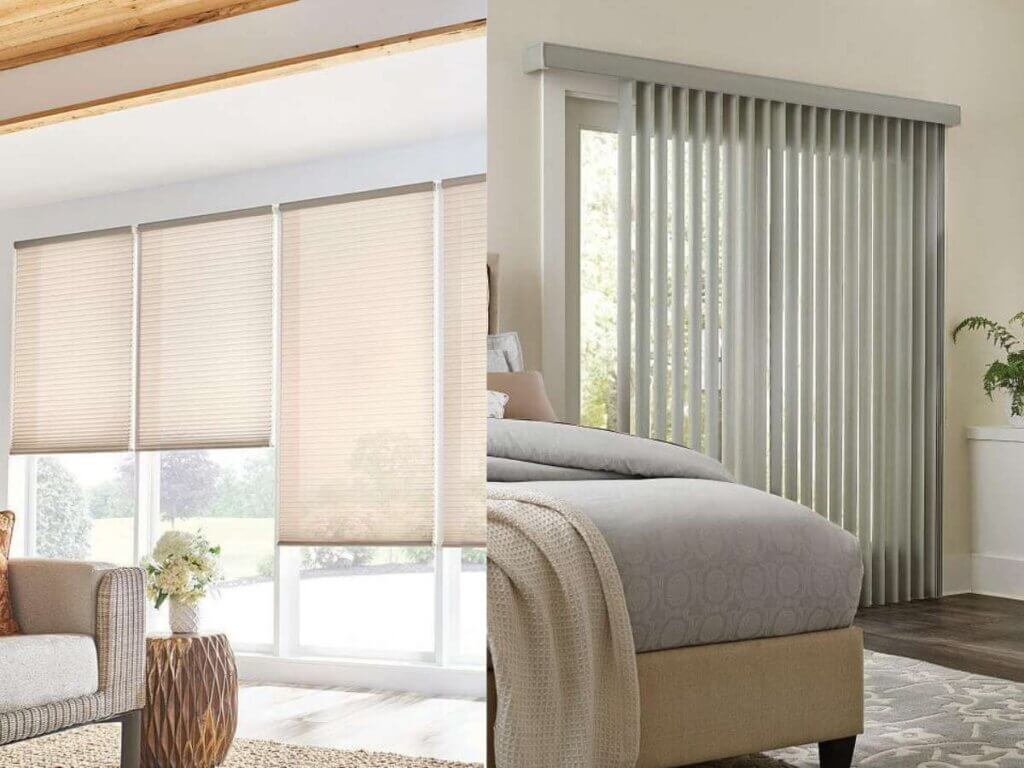
Aesthetic Appeal & Home Decor Impact
From a design standpoint, cellular shades provide a softer, seamless appearance that blends well with modern home decor. Their structured pleats create subtle texture while maintaining a streamlined look.
Vertical blinds lean more toward a practical window fashion. Fabric vanes can enhance aesthetic appeal, but traditional vinyl versions are typically chosen for function over style.
Your choice may depend on whether your priority is visual softness or structured utility.
Quick Comparison Overview
Category | Cellular Shades | Vertical Blinds |
Insulation | Excellent | Minimal |
Privacy | Full coverage | Adjustable slats |
UV Protection | Strong | Moderate |
Ideal Window Type | Standard windows | Wide openings |
Style | Soft, modern | Functional, linear |
Conclusion
The debate around cellular shades vs vertical blinds isn’t about which option is better overall—it’s about which one fits your specific needs. Honeycomb shades deliver superior insulation, light filtering, and refined aesthetic appeal. Vertical blinds provide practical performance for large openings, sliding glass doors, and moisture-prone spaces.
Both window coverings can be customized with motorized blinds, a range of mounting options, and thoughtful installation to improve comfort and privacy.
If you’re still comparing options, MITS Eastern Shore can guide you through fabric samples, slat width selections, and pleat size choices so you can make a confident, informed decision. Schedule a consultation today and choose window treatments designed to support your home’s style, efficiency, and everyday comfort.