
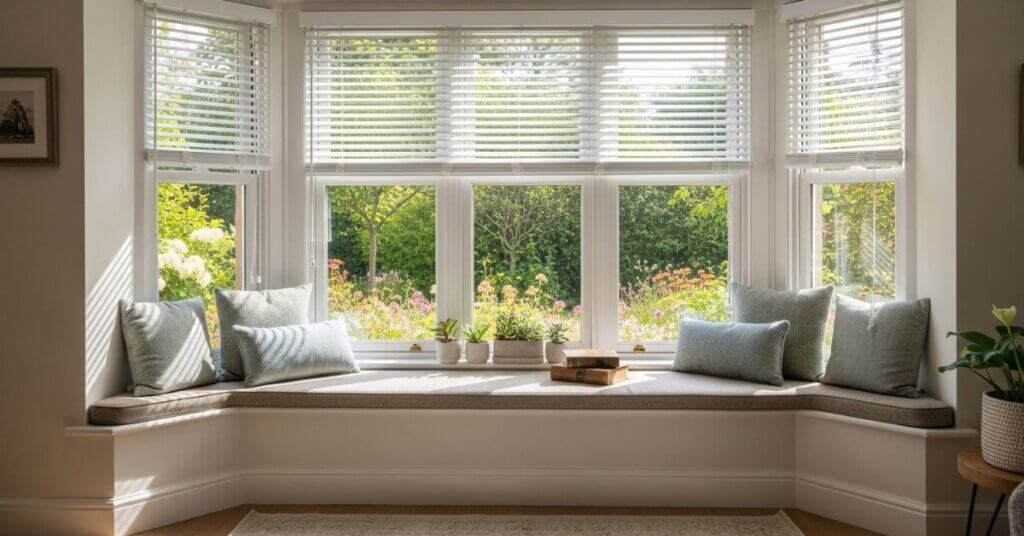
Choosing the right window treatments for bay windows can feel more complicated than expected. The angles, depth, and width of a bay create unique design and installation considerations. Many homeowners rush the process, leading to poor fit, limited light control, or awkward styling. This guide breaks down the most common mistakes so you can make confident, well-informed decisions that enhance both function and aesthetics.
Why Bay Windows Need a Different Approach
Bay windows extend outward, creating multiple panels and angles. That means standard curtains, blinds, or shades don’t always fit properly without thoughtful measuring, mounting, and placement. Getting it right ensures:
- Balanced proportions
- Smooth operation
- Better privacy and lighting control
- A polished, custom look
Mistake #1: Incorrect Measuring
Why It Happens
Bay windows often have varying width, depth, and angles, making them harder to measure than flat windows.
What to Watch For
- Ignoring individual window panel sizes
- Not accounting for clearance and trim
- Overlooking mounting depth for blinds or shades
Quick Guide
Area to Measure | Why It Matters |
Width per panel | Ensures proper fit |
Depth | Determines inside mount feasibility |
Angle | Affects rod or hardware selection |
Tip: Always measure each section separately rather than assuming uniform dimensions.
Mistake #2: Choosing the Wrong Mounting Style
Inside vs. Outside Mount
The wrong mounting decision can affect both functionality and appearance.
- Inside mount: Clean and minimal, but requires enough depth
- Outside mount: Better for light control and insulation, but needs proper hardware placement
Common Issues
- Blinds hitting window frames
- Curtains not covering gaps
- Limited light blocking
Best Practice: Evaluate your bay’s depth and clearance before selecting blinds, shades, or drapery.
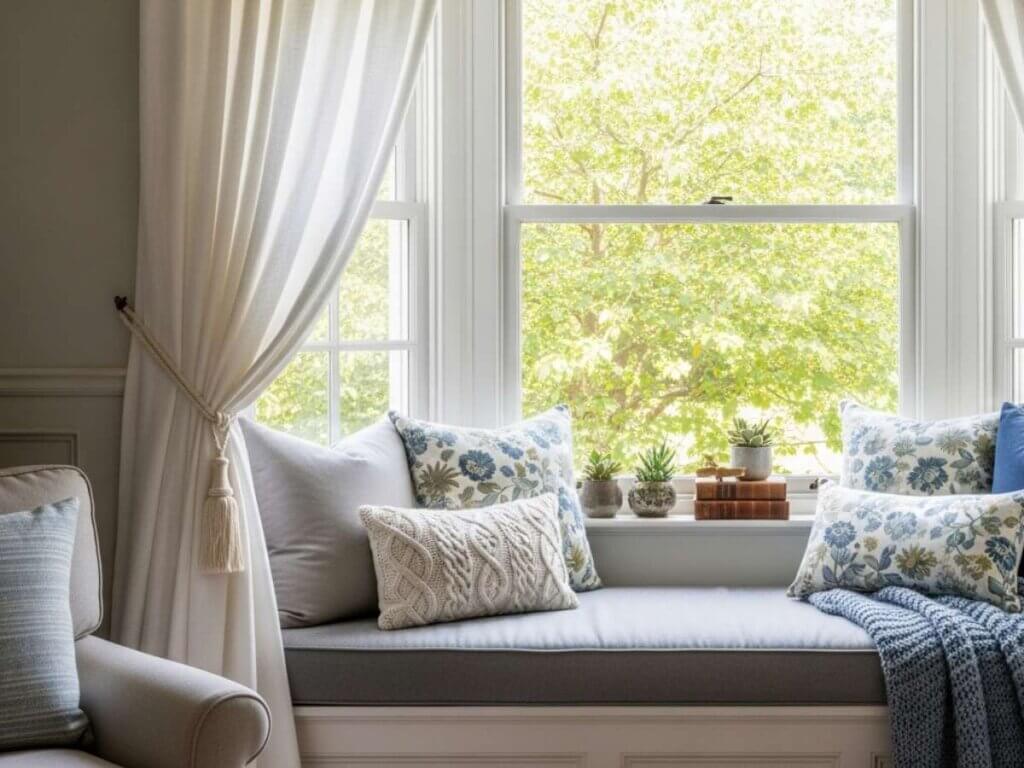
Mistake #3: Ignoring Proportions and Angles
Bay windows are all about geometry. Poor proportions can make the entire space feel off.
Common Styling Errors
- Using rods that don’t match the angle of the bay
- Hanging curtains too short or too narrow
- Choosing bulky fabrics that overwhelm the space
What Works Better
- Custom rods and hardware designed for angled windows
- Properly scaled drapery panels
- Thoughtful fabric selection that complements the room
Mistake #4: Overlooking Light and Privacy Needs
Balancing lighting and privacy is especially important with bay windows since they often face multiple directions.
What Can Go Wrong
- Too much light exposure during certain times of day
- Lack of privacy due to gaps between panels
- Uneven brightness across the bay
Smart Solutions
- Layering treatments (e.g., shades + curtains)
- Using lined drapery for better light control
- Adding adjustable blinds or shades for flexibility
Mistake #5: Skipping Customization
Off-the-shelf options rarely work well for bay windows.
Why Custom Matters
- Bay windows vary in angle, width, and depth
- Standard sizes often leave gaps or look uneven
- Hardware may not align properly
Benefits of Custom Window Treatments
- Precise fit for each panel
- Better installation and operation
- Enhanced aesthetics and styling
Pro Tip: Custom solutions allow you to coordinate textiles, valances, headers, and lining for a cohesive design.
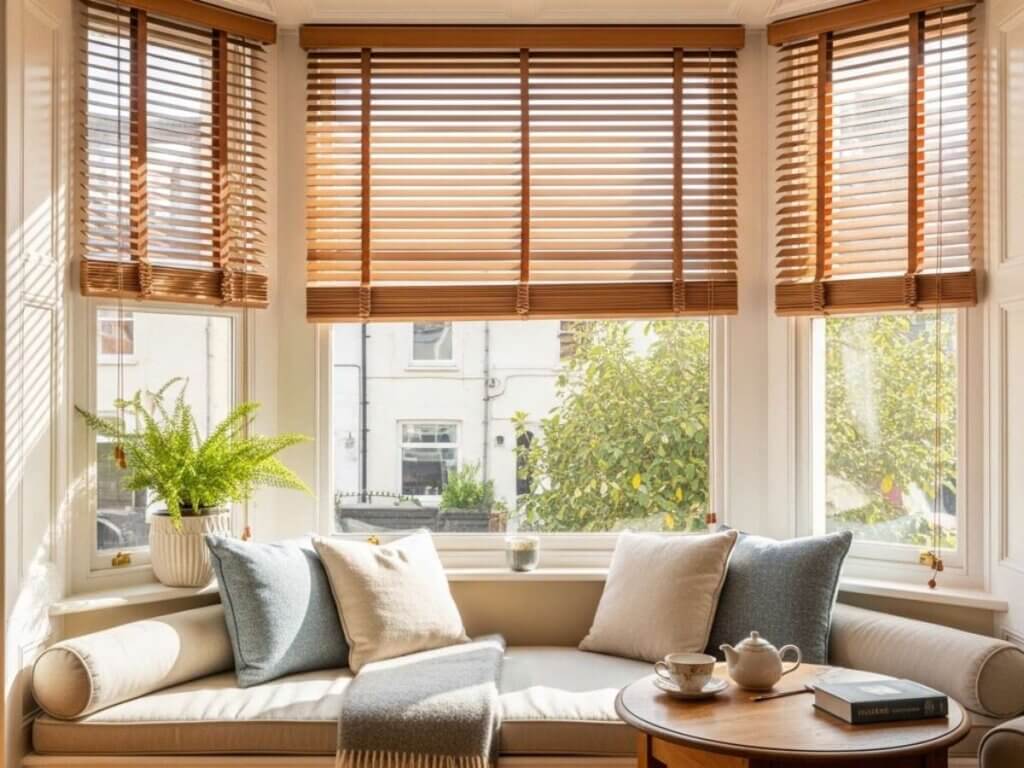
Styling Ideas That Work for Bay Windows
- Blinds or shades for clean lines and easy light control
- Curtains or drapery for softness and added insulation
- Layered treatments for versatility
- Valances to unify multiple panels
Frequently Asked Questions about Window Treatments for Bay Windows
1. What are the best window treatments for bay windows?
2. Should I treat each window separately or as one unit?
3. Can I install bay window treatments myself?
4. How do I improve insulation in bay windows?
5. What fabric works best for bay window curtains?
Make the Right Choice for Your Bay Windows
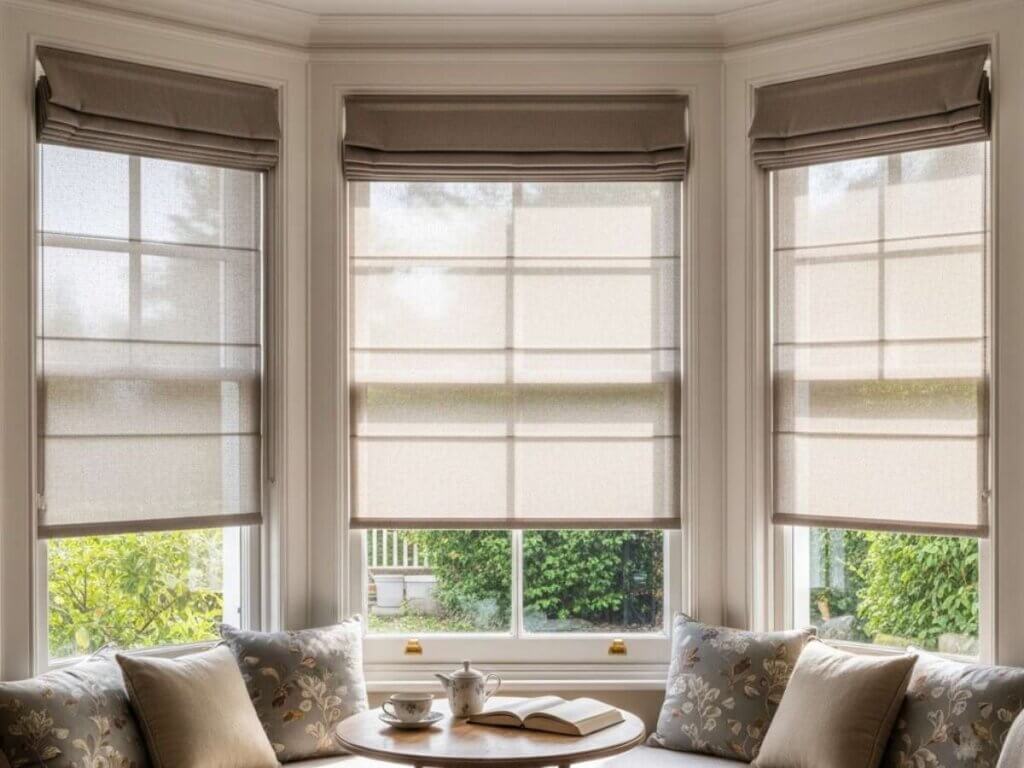
Bay windows can transform a space, but only when treated with the right balance of design and function. Small missteps in measuring, mounting, or styling can lead to results that feel incomplete or frustrating to use. Taking a thoughtful, customized approach ensures your window treatments enhance both comfort and visual appeal.
If you’re planning to upgrade your window treatments for bay windows, working with a professional can make the process easier and more precise. Schedule a consultation with MITS Eastern Shore to explore tailored options that fit your space perfectly.