

Choosing between custom sheer shades and standard blinds comes down to how much light control you want and how you want a room to feel. Sheer shades diffuse light through soft fabric while still allowing adjustable privacy, making them a natural fit for living rooms and bedrooms. Standard blinds, whether horizontal or vertical, offer sharper light control at a lower upfront cost. This makes them a practical choice for offices and budget-conscious spaces.
The Basics
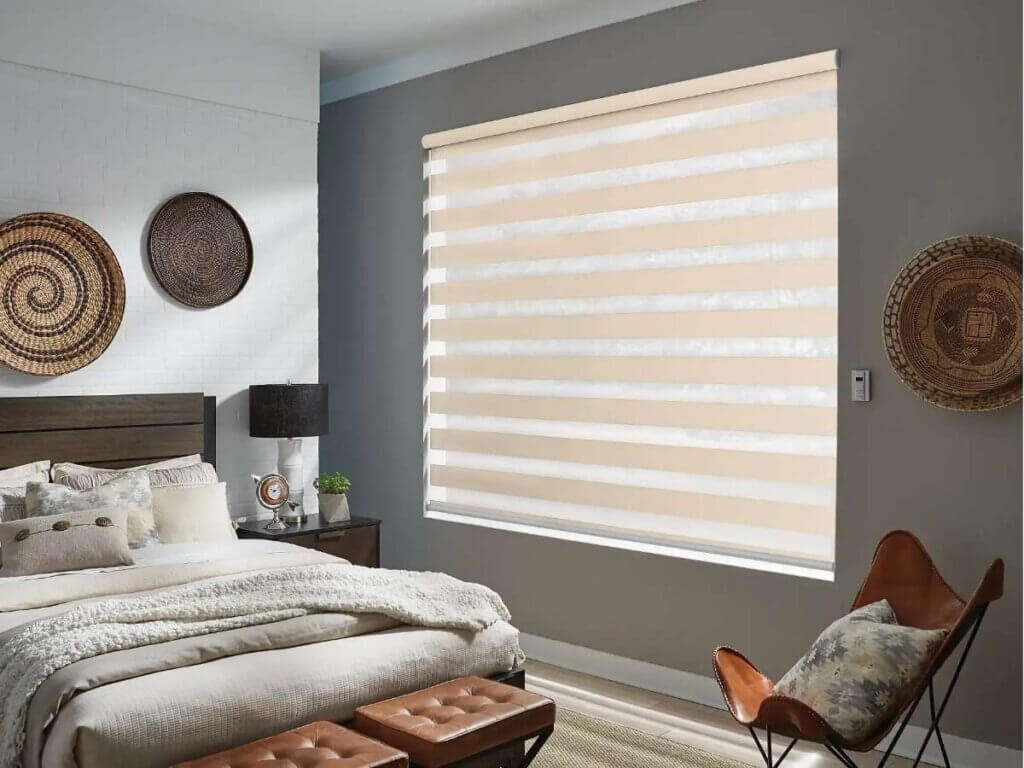
Custom sheer shades pair a soft outer fabric with an inner vane system, giving you a shade’s layered look with some of the light control you’d expect from blinds. They’re built to your window’s exact width and drop, so they look more tailored than off-the-shelf options and can also serve as a decorative feature.
Standard blinds come in horizontal or vertical slat configurations and remain one of the most recognizable window coverings on the market. Horizontal blinds suit standard windows and tilt open easily. Vertical blinds typically work well on sliding doors, and both styles come in materials such as faux wood and aluminum.
Light Filtering and Privacy
Sheer shades soften incoming light and cut glare without making a room feel closed off, so they suit spaces where natural light is a priority. Blinds provide more precise control because angling the slats can let in light or block it out almost completely. This can benefit shift workers or rooms that need to go dark on demand.
Style and Historic Homes
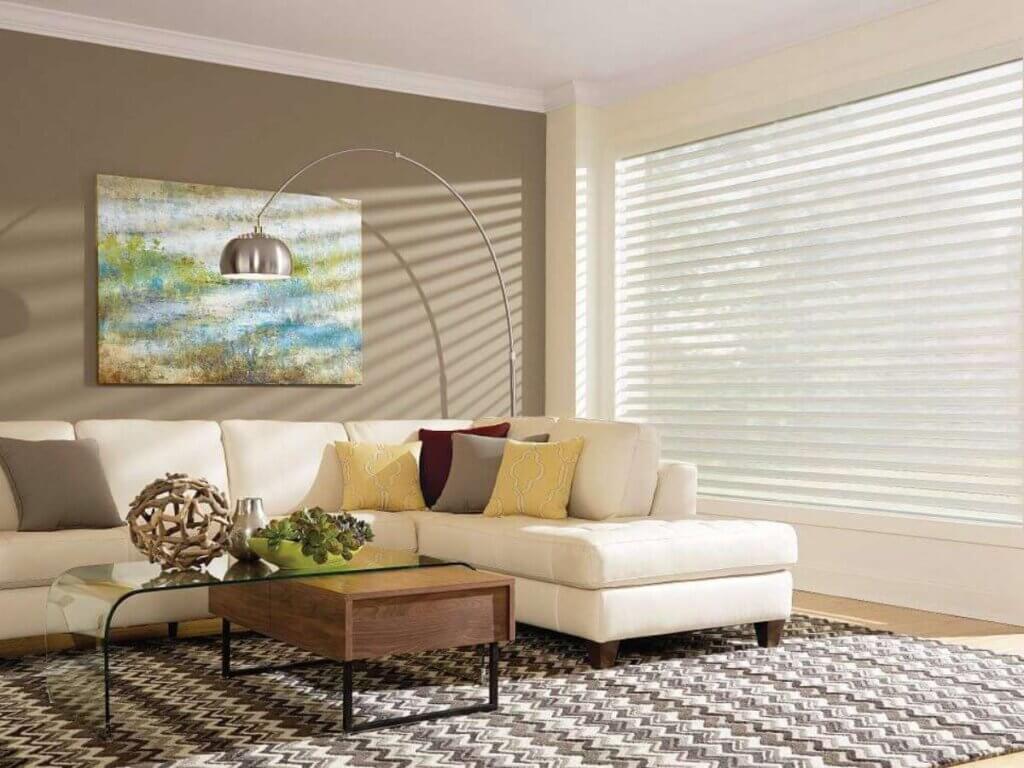
Sheer shades add texture and softness that pair well with minimalist decor, while blinds bring geometric lines for a streamlined, modern look. Homeowners in historic districts often face added considerations for street-facing windows, since preservation guidelines or architectural review boards sometimes regulate covering color, material, or mounting hardware.
Blinds aren’t the only way to get clean, modern lines — cellular shades offer a different take on that same streamlined look. Check out our guide on black cellular shades.
It’s worth checking with your local preservation office before installing new treatments. A knowledgeable provider can also help you find an option that fits the home’s character.
Durability, Insulation, and Value

Factor | Custom Sheer Shades | Standard Blinds |
Light filtering | Soft, diffused | Precise, adjustable |
Privacy | Good, some visibility through fabric | Strong when closed |
Insulation and warmth | Adds warmth to a room | Varies by material |
Durability | Long-lasting with care | Durable, especially aluminum or faux wood |
Price | Higher, custom fabrication | Lower to moderate |
Sheer shades cost more since they’re custom-fit and use specialty fabric, while blinds are usually more budget-friendly for homes with many windows. Insulation matters too, since fabric shades add warmth and well-fitted blinds can also help regulate temperature.
Both options can last for years when the material suits the room.
Control Options and Everyday Comfort
Both products come in motorized versions, which are useful for hard-to-reach windows and homeowners who want easier daily control due to mobility limitations.
Beyond that, the right choice comes down to how each room is used. A bedroom might call for warmth, while a kitchen or office might need sharper control.

Frequently Asked Questions About Custom Sheer Shades vs. Standard Blinds
Can I mix sheer shades and blinds in the same home?
Yes. Many homeowners use sheer shades in living areas and bedrooms, paired with blinds in bathrooms or kitchens where moisture is a bigger concern.
How do I clean each one?
Sheer shades need gentle dusting, while faux wood or aluminum blinds can be wiped down with a damp cloth.
Do sheer shades work in bathrooms?
Fabric shades typically work better in lower-moisture rooms because humidity can affect the material over time. Moisture-resistant blinds are usually the more practical pick.
Will this affect resale value?
Treatments alone rarely make or break resale value, but neutral, well-maintained coverings tend to show better.
What should I ask about warranties?
Ask what the warranty covers and how long the coverage lasts. This may include items like motorization parts or fabric defects.
Which Option Works Best for You?
Choosing between custom sheer shades and standard blinds comes down to how you want a room to look and function. Sheer shades bring warmth and softness, while blinds offer more direct control at a lower cost. The right answer often changes from room to room.
Made in the Shade Eastern Shore can walk you through what fits your home and budget. Schedule a consultation to explore styles that work for your windows.